





Upcycling vs. Recycling: Understanding the Difference
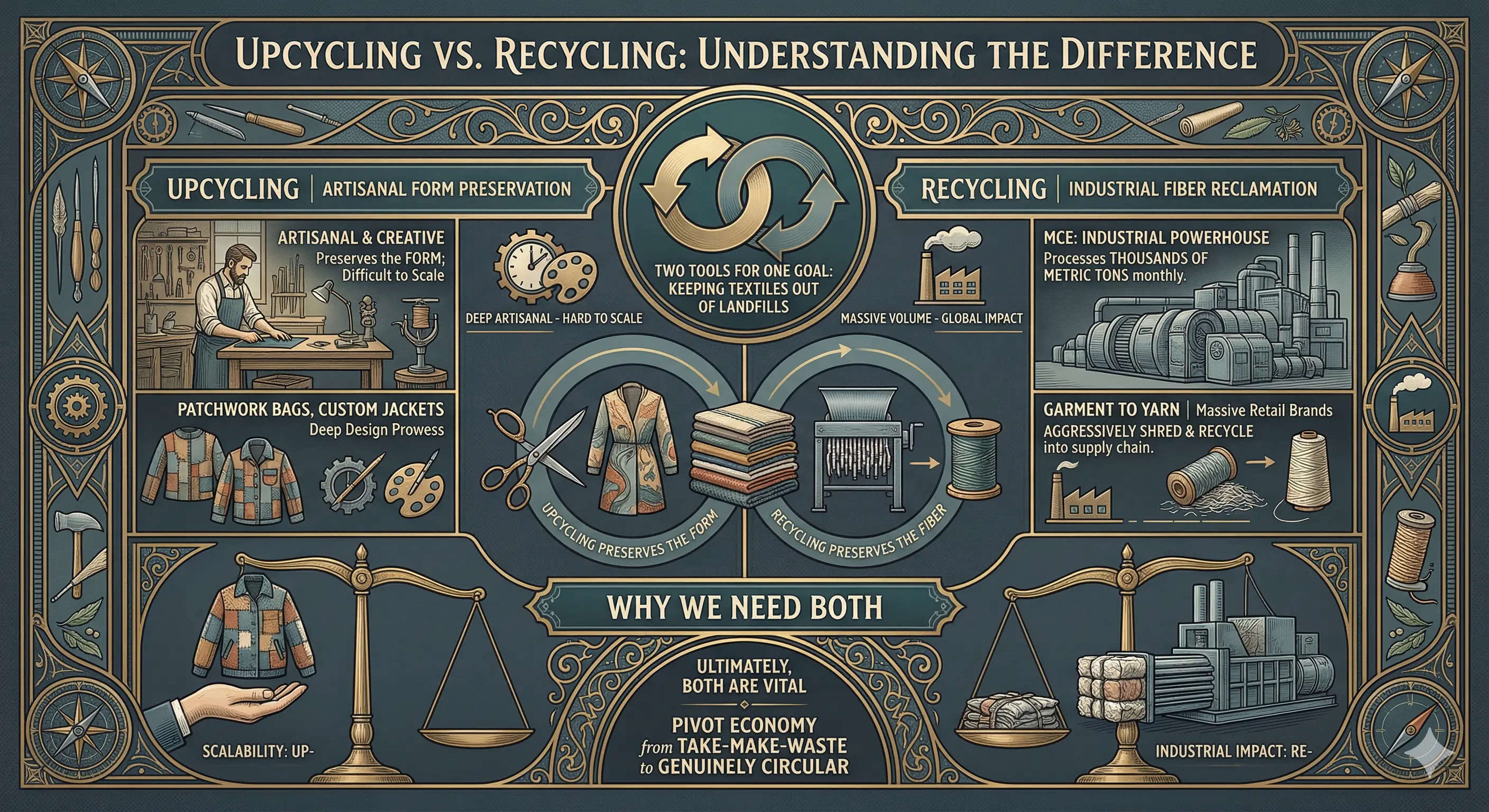
In the conversation surrounding sustainable fashion, terms like "eco-friendly," "circular," "upcycled," and "recycled" are often used interchangeably. But for manufacturers and truly conscious consumers, there is a very strict distinction between upcycling and recycling. Both methods are essential tools for keeping textiles out of landfills, but they utilize entirely different processes and serve distinct economic purposes.
While both methods keep clothes out of landfills, understanding their distinctions empowers manufacturers to maximize the value geometry of their waste streams.
Upcycling is fundamentally about creative reuse. It involves taking an old or scrap item and giving it a new life without breaking down its core material fibers. The original form is altered, but the integrity of the fabric remains exactly as it was.
For example, taking post-industrial denim scraps and sewing them together to create a patchwork tote bag is upcycling. Cutting an old, oversized shirt into a modern crop top is upcycling. The energy consumption is incredibly low because it only requires manual labor, scissors, and a sewing machine.
What is Recycling?Recycling, on the other hand, is a scientific and industrial process. It involves completely breaking a garment down so that its physical form is destroyed to extract the raw base materials. The material is then processed to create an entirely new product from scratch.
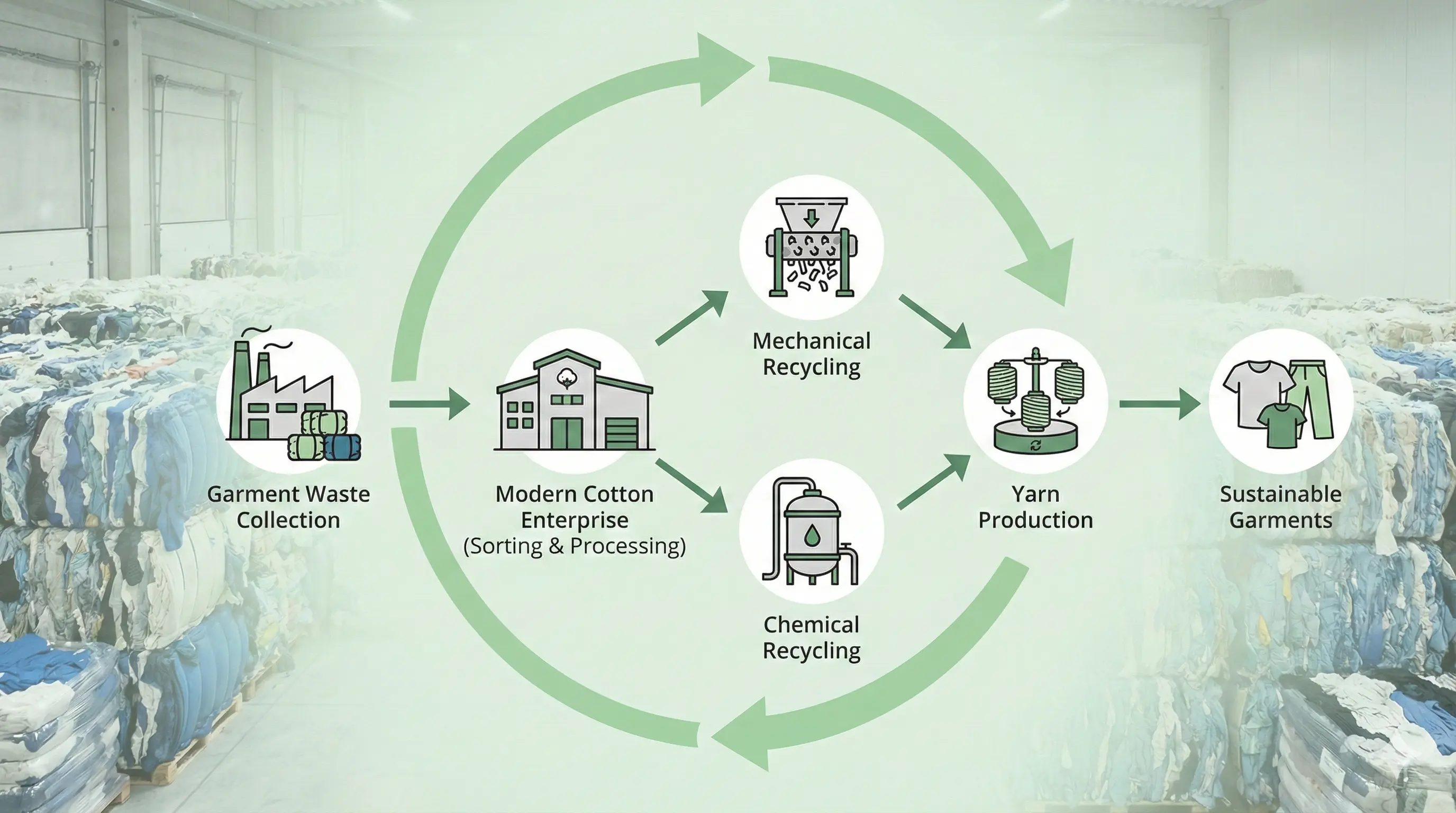
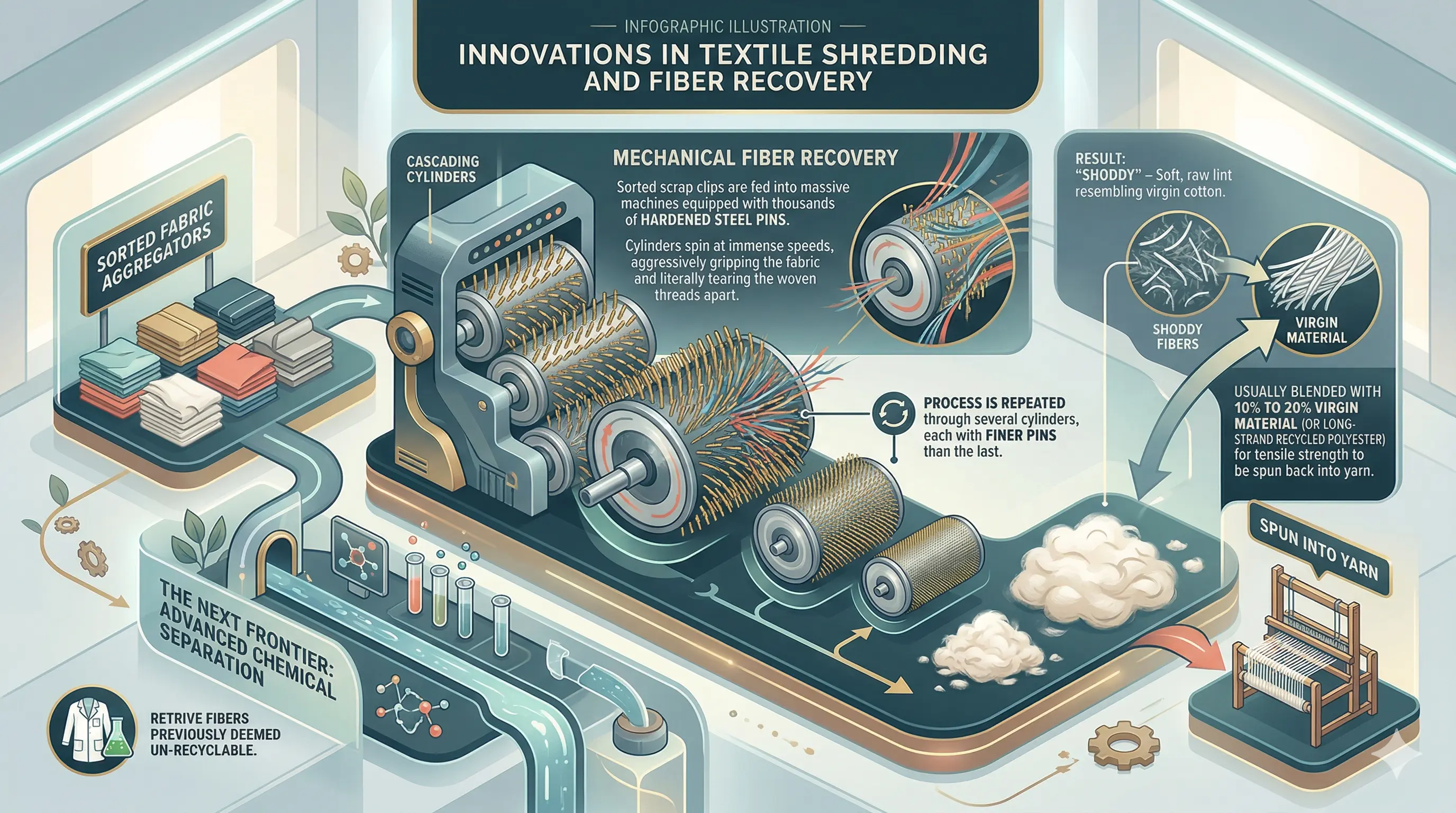
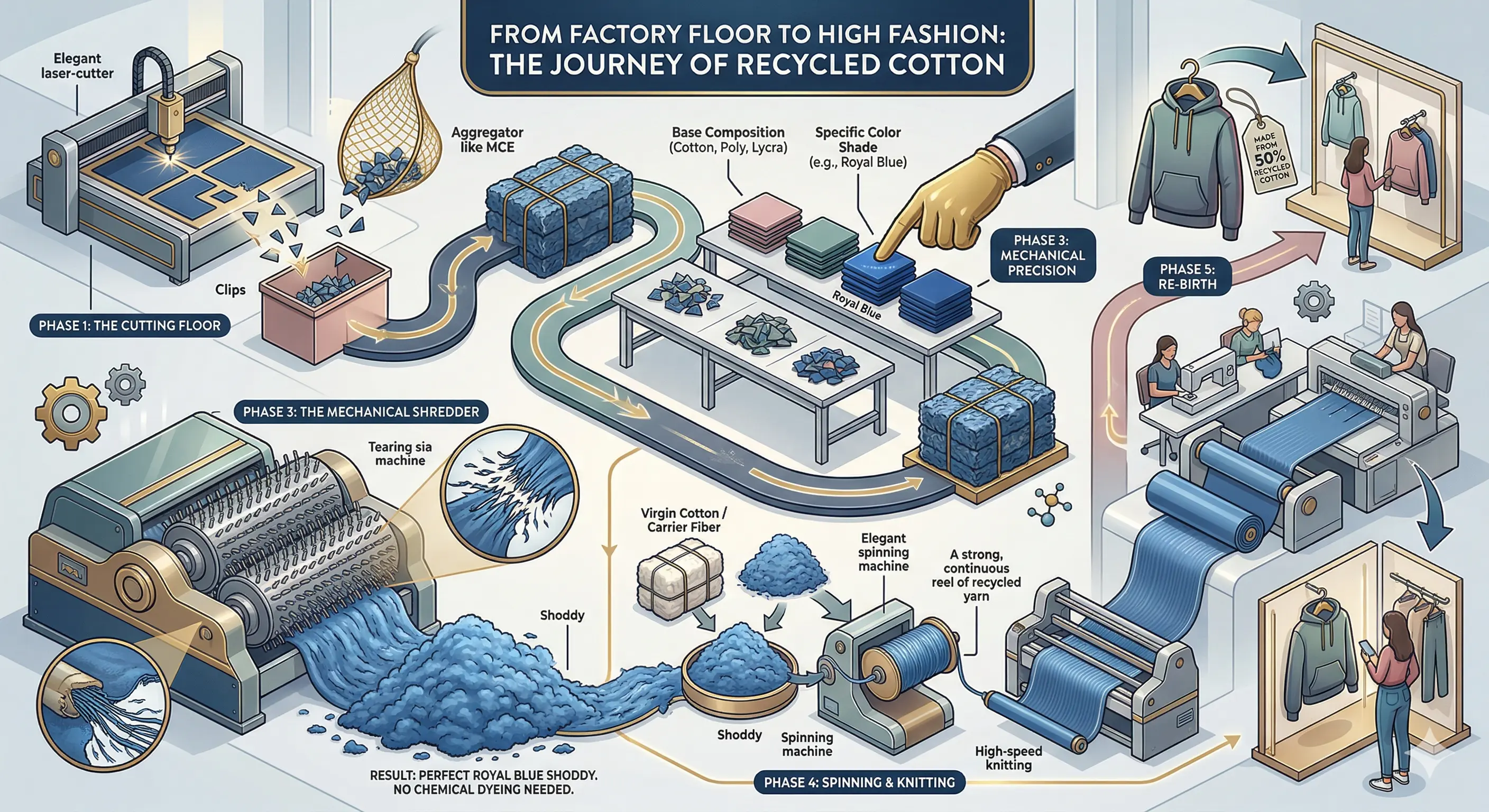
In the textile world, recycling means taking a heap of sorted cotton clips, running them through colossal mechanical shredders with pinned cylinders, and tearing the fabric until it reverts back into raw cotton fluff. This fibrous fluff—or "shoddy"—is then mixed with a small percentage of virgin cotton or polyester for strength, and spun back into brand new yarn.
Why We Need Both- Scalability: Upcycling is beautiful and highly sustainable, but it is deeply artisanal and difficult to scale. Creating 10,000 patchwork bags takes time and design prowess.
- Industrial Impact: Recycling is the industrial powerhouse. At MCE, we deal with thousands of metric tons of waste every month. The only way to process that volume of global waste is to aggressively shred and recycle it back into the foundational supply chain so massive retail brands can utilize recycled thread in mass production.
Ultimately, upcycling preserves the *form*, while recycling preserves the *fiber*. Both are vital if we are to pivot the modern economy from a "take-make-waste" model to a genuinely circular one.
Recent Post

Sign Up For New Product News & Offers
Monthly Newsletter


Modern Cotton Enterprise (MCE) is a leading garment waste recycling and export company based in Bangladesh, dedicated to advancing circularity in the global textile industry.


Modern Cotton Enterprise © | All Rights Reserved