





Navigating Greenwashing: How to Verify Real Recycled Textiles
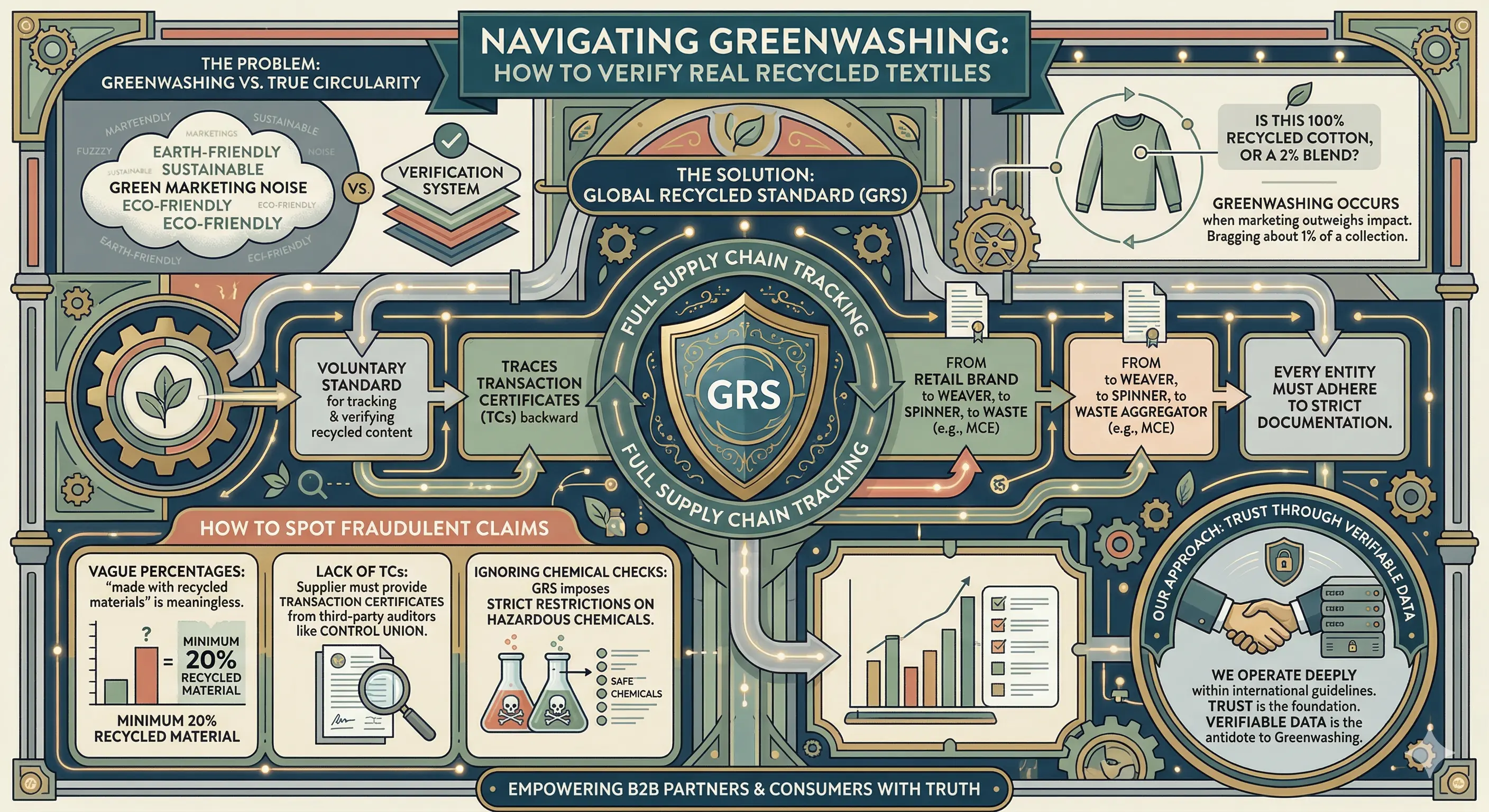
With eco-consciousness becoming a massive selling point in modern retail, terms like "Earth-friendly," "Green," and "Sustainable" have flooded the market. However, a significant portion of these claims are exaggerated or entirely fabricated—a practice known as Greenwashing. For B2B partners and end consumers, identifying true circularity amidst the marketing noise is a formidable challenge.
Is a garment truly made of 100% recycled cotton, or is it merely a standard fabric possessing a 2% recycled blend marketed aggressively as eco-friendly? Certification is the only key to truth.
Greenwashing occurs when a company spends more time and money marketing themselves as environmentally friendly than actually minimizing their environmental impact. In the textile industry, this often manifests as brands hyping a "conscious collection" that only represents 1% of their massive, highly polluting global output.
The GRS Standard ExplainedThe most robust shield against greenwashing in the supply chain is the **Global Recycled Standard (GRS)**. The GRS is a voluntary product standard for tracking and verifying the content of recycled materials in a final product. Crucially, it applies to the full supply chain.
If a spinning mill claims to be selling GRS-certified recycled yarn, every entity preceding them in the chain—including the waste aggregator like MCE—must also adhere to strict documentation. The auditor traces the transaction certificates backwards: from the retail brand, to the weaver, to the spinner, all the way back to the waste aggregator.
How to Spot Fraudulent Claims- Vague Percentages: A product labeled "made with recycled materials" means nothing without a specific percentage. Under GRS, products must contain a minimum of 20% recycled material to bear the logo.
- Lack of Transaction Certificates (TCs): In B2B dealings, a supplier claiming recycled origins should readily provide TCs generated by third-party auditors like Control Union.
- Ignoring Chemical Checks: True sustainability encompasses the chemicals used. GRS imposes strict restrictions on the use of hazardous chemicals in the processing of recycled products.
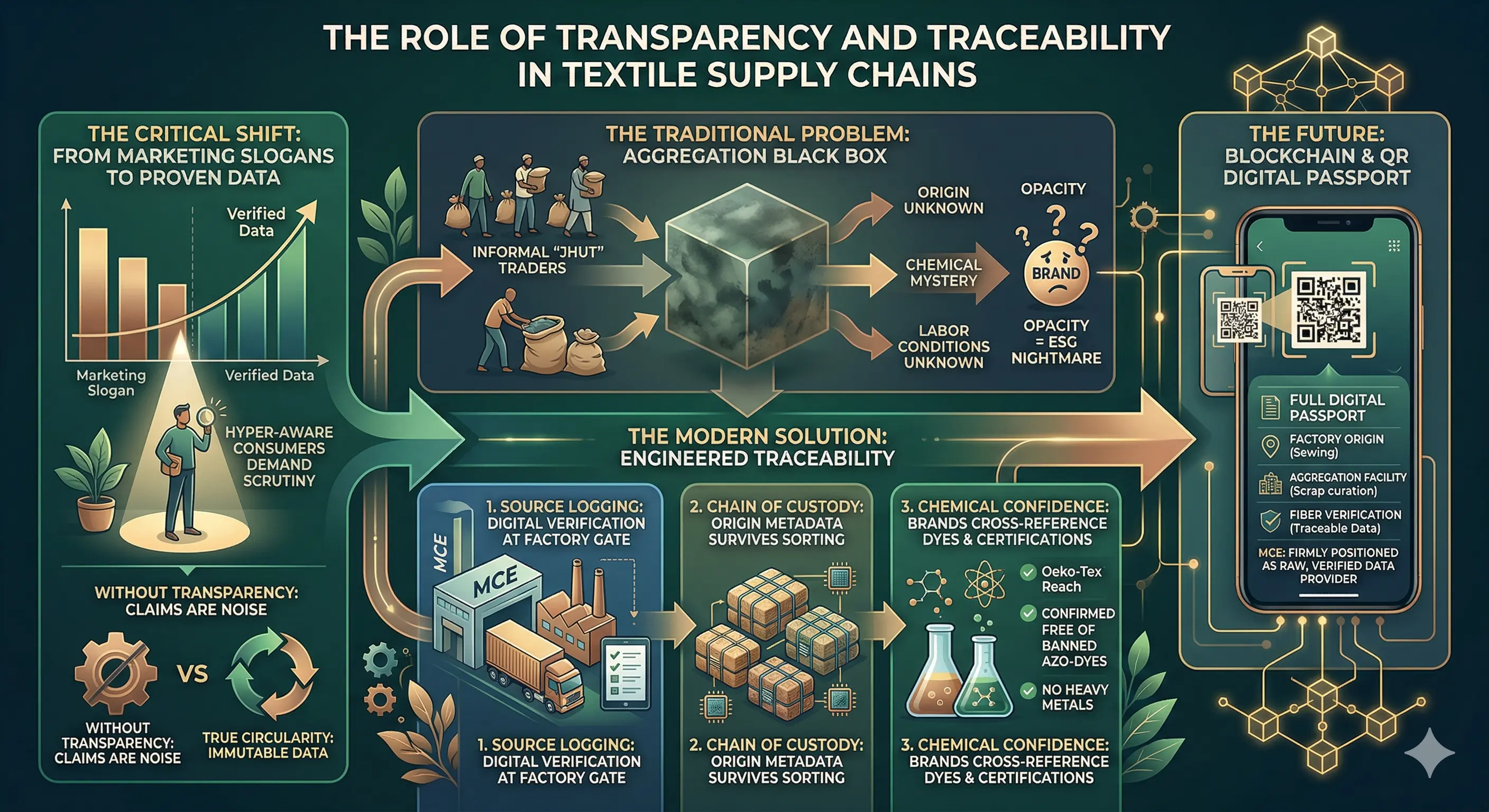
We operate deeply within these international guidelines because we understand that trust is the foundation of the post-industrial circular economy. Verifiable data is the definitive antidote to greenwashing.
Recent Post

Sign Up For New Product News & Offers
Monthly Newsletter


Modern Cotton Enterprise (MCE) is a leading garment waste recycling and export company based in Bangladesh, dedicated to advancing circularity in the global textile industry.


Modern Cotton Enterprise © | All Rights Reserved