





The Role of Transparency and Traceability in Textile Supply Chains
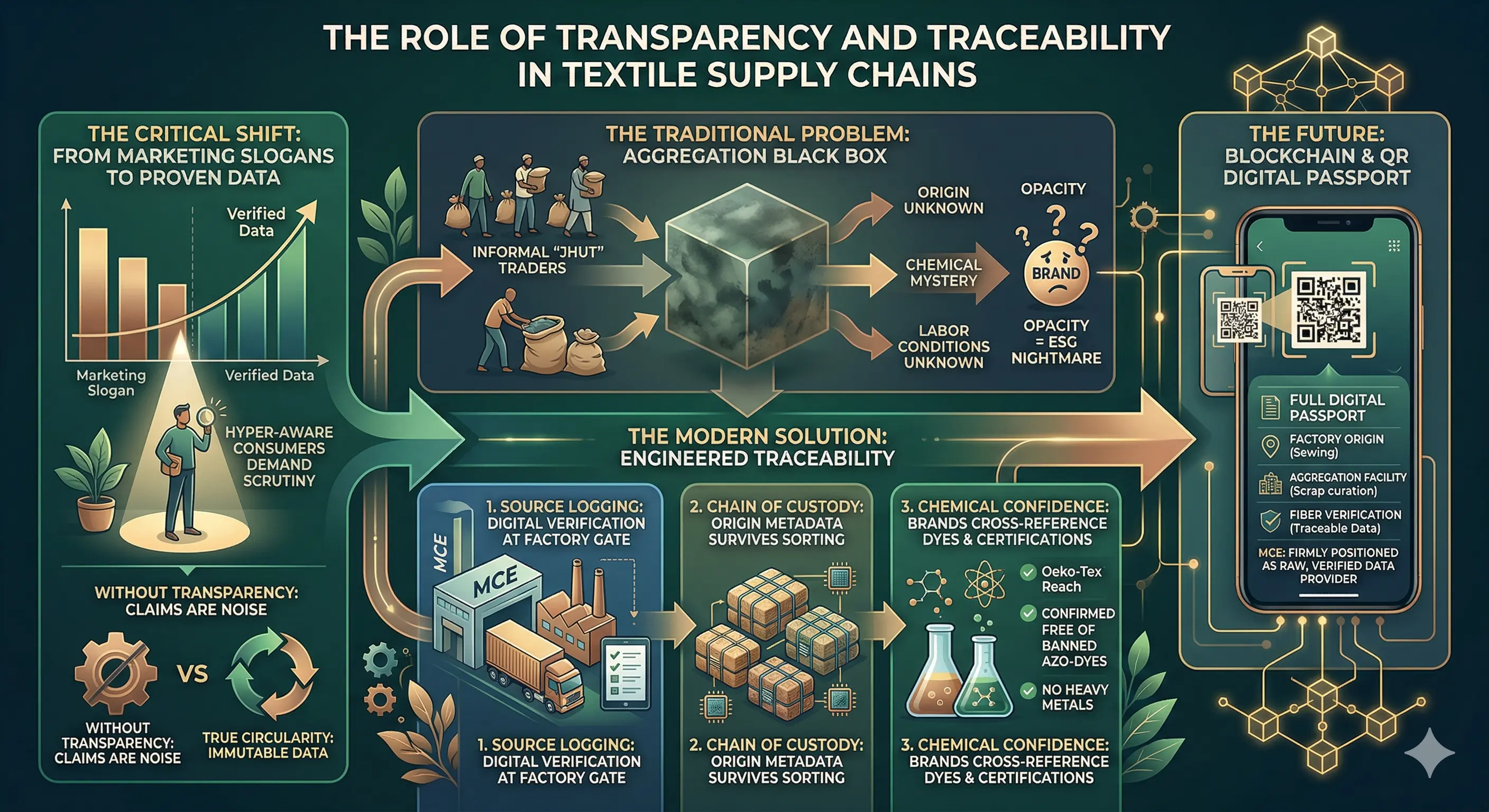
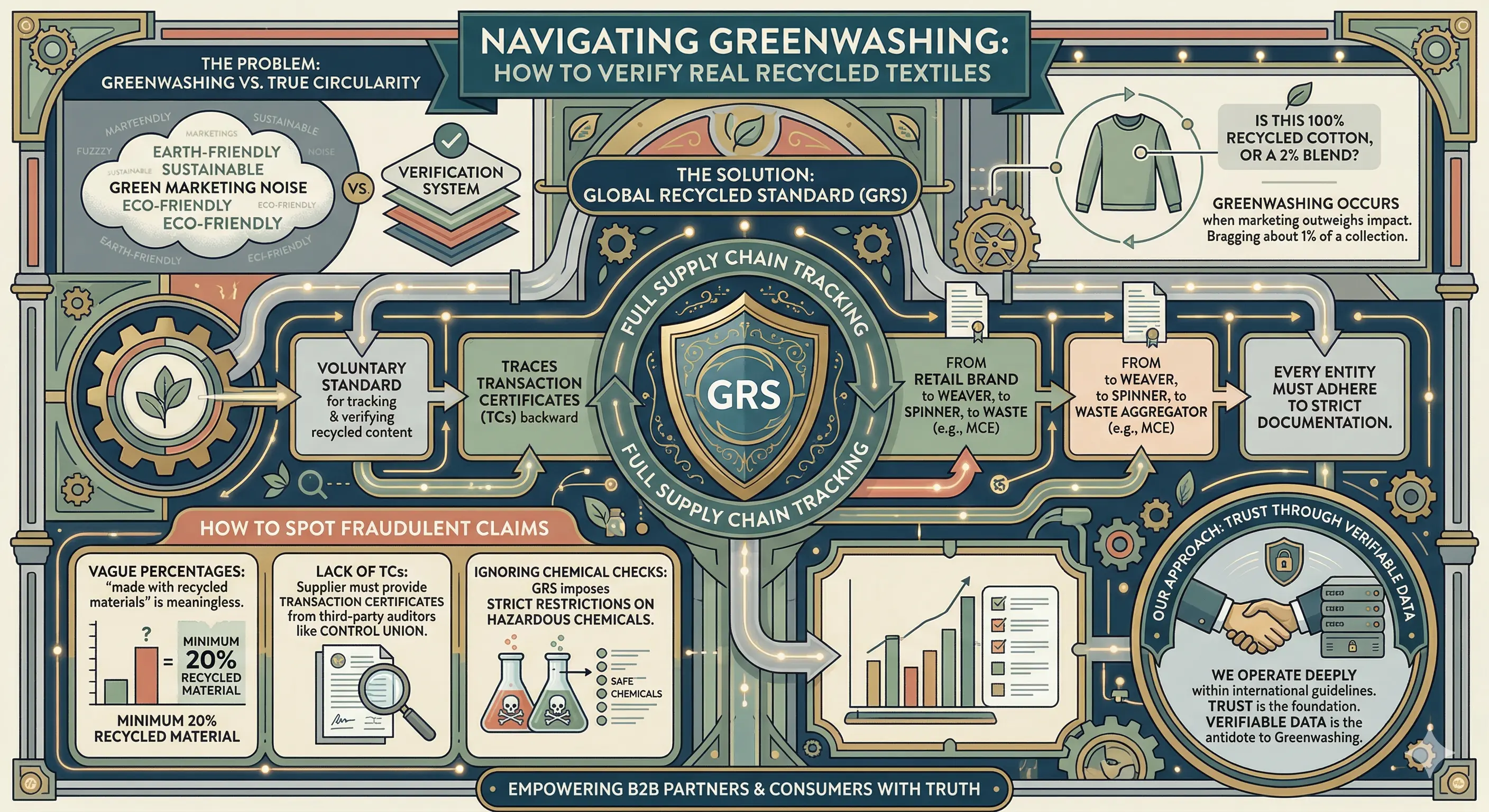
In the modern fashion economy, a sustainability claim without data is merely a marketing slogan. As consumers become more hyper-aware of their ecological footprint, global brands are facing heavy scrutiny. They can no longer simply staple a "Recycled" tag on a garment; they must prove it. This shift is driving a massive industry demand for strict transparency and traceability of pre-consumer waste.
Without transparency, sustainable claims are just noise. True circularity is backed by immutable, unalterable data.
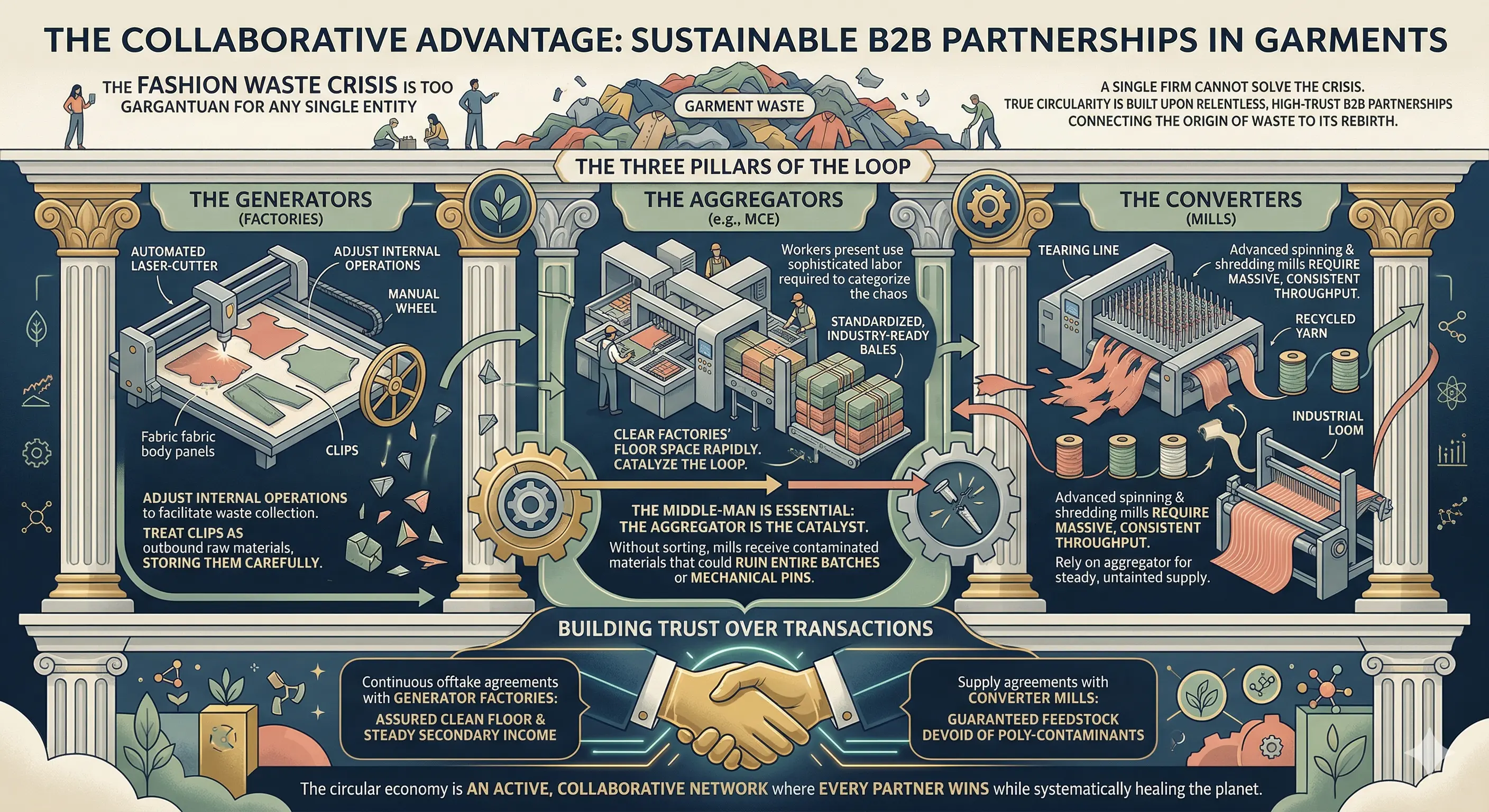
Historically, the waste aggregation sector—often characterized by informal "Jhut" traders—was a black box. A spinning mill would buy a bale of scraps from a middleman with absolutely no idea where those scraps originated, what chemicals were previously used to dye them, or what labor conditions existed in the factory that discarded them. This opacity is a nightmare for European and American brands trying to meet environmental, social, and governance (ESG) quotas.
Engineering TraceabilityTo solve this, modern waste enterprises must operate like data companies, not just salvage yards. At Modern Cotton Enterprise, traceability begins the moment a truck leaves a partner factory.
- Source Logging: We maintain digital logs verifying exactly which factory generated a specific batch of waste.
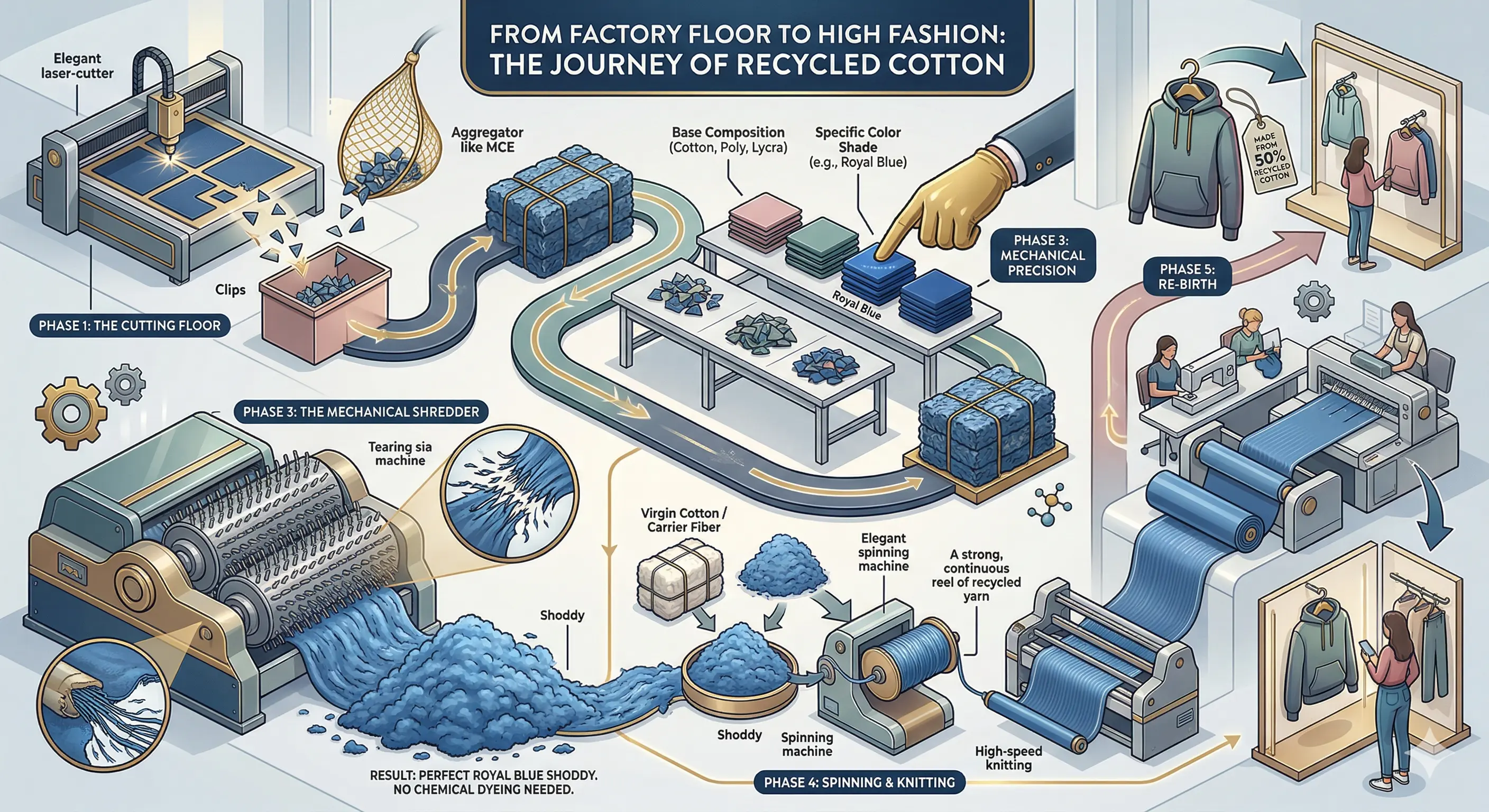
- Chain of Custody: As the material moves through our sorting facilities, its origin metadata survives. The final sorted master bale is linked back to the specific manufacturing tier.
- Chemical Confidence: By knowing the factory of origin, brands can cross-reference the Oeko-Tex or Reach certifications of the dyes used in the original fabric. This ensures that the recycled yarn does not contain banned azo-dyes or heavy metals.
The industry is rapidly approaching a milestone where a consumer in a retail store will scan a QR code on a shirt tag and see a full digital passport. They will see not just the factory where the shirt was sewn, but the aggregation facility where the scrap waste was meticulously curated to create the thread. MCE is firmly positioned to provide the raw, verified data required to make that future a reality.
Recent Post

Sign Up For New Product News & Offers
Monthly Newsletter


Modern Cotton Enterprise (MCE) is a leading garment waste recycling and export company based in Bangladesh, dedicated to advancing circularity in the global textile industry.


Modern Cotton Enterprise © | All Rights Reserved