





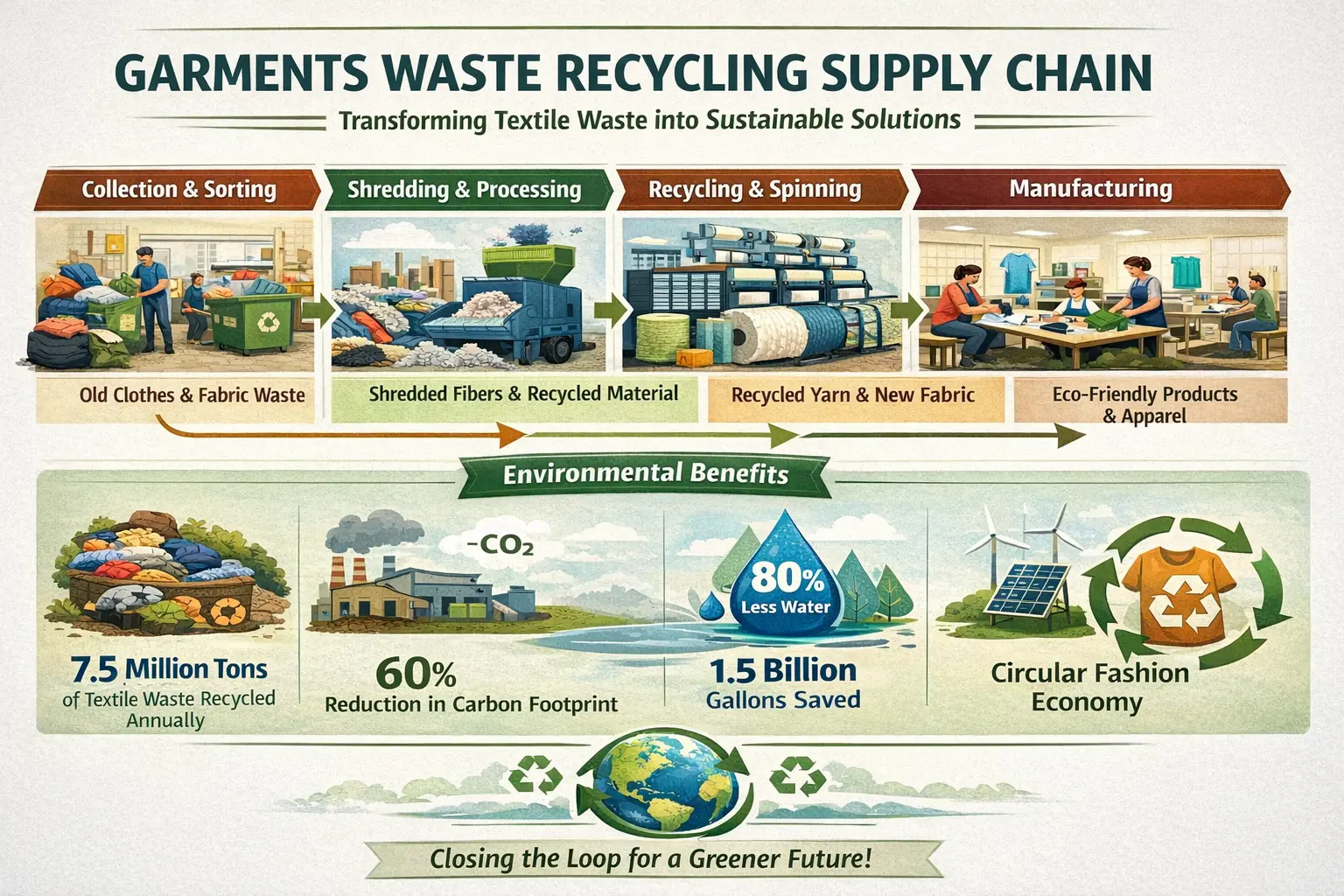
The Invisible Supply Chain: Why "Pre-Consumer" Waste is the New Organic Cotton
For decades, the fashion industry has been obsessed with the start of the supply chain: growing organic cotton, finding better dyes, and ethical farming. But a quiet revolution is happening at the other end of the factory line.
We are witnessing the rise of Pre-Consumer Waste as a premium raw material class of its own. It is no longer just "trash" to be hauled away; it is a commodity that rivals virgin cotton in value, provided it is handled correctly.
This article explores why the industry is pivoting toward factory waste and how the Modern Cotton Enterprise (MCE) is turning a chaotic informal sector into a streamlined, high-tech supply chain.
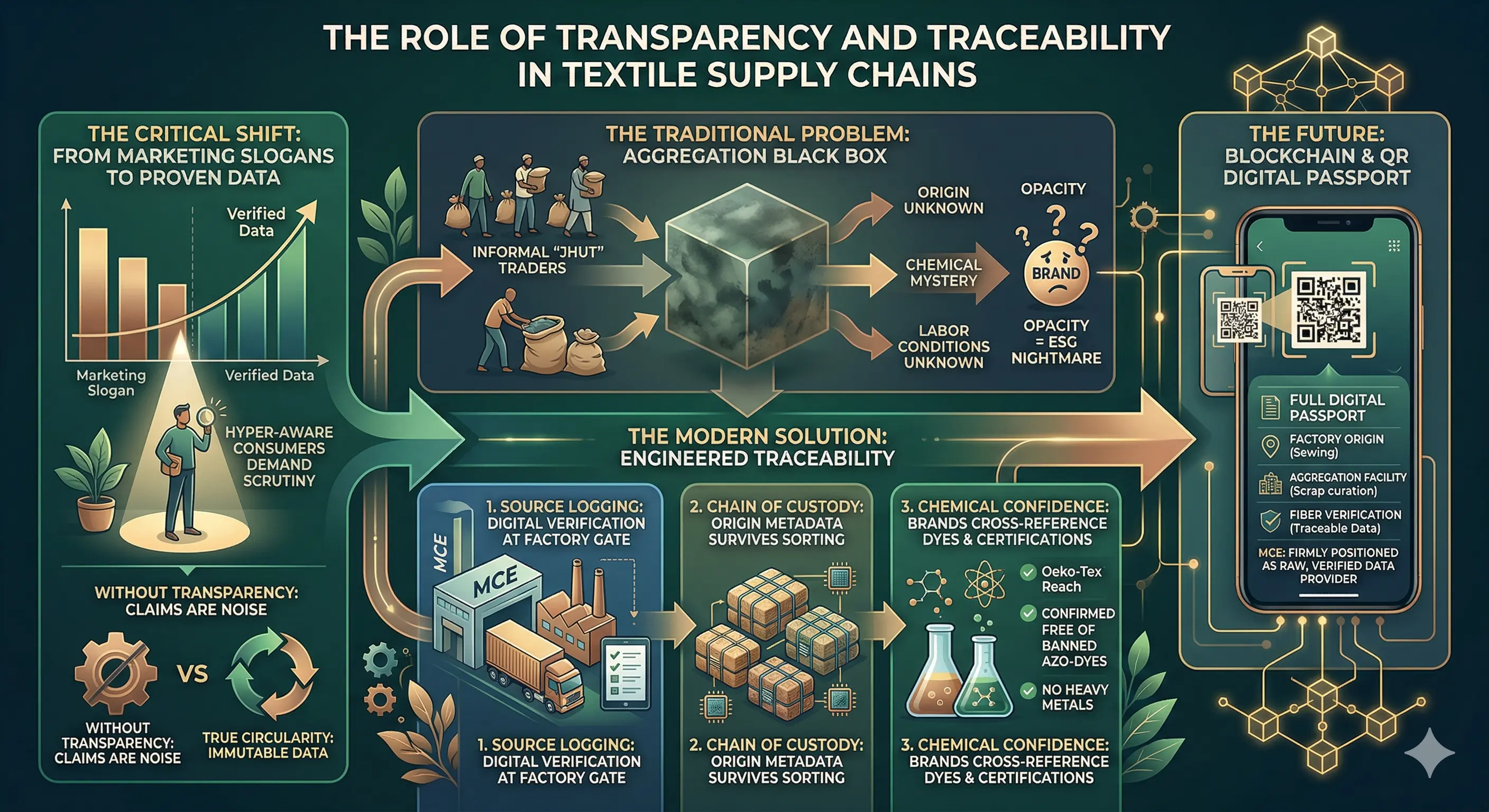
A future where every garment tag has a QR code that tells you not just where the shirt was sewn, but which factory's waste was saved to make the fabric.
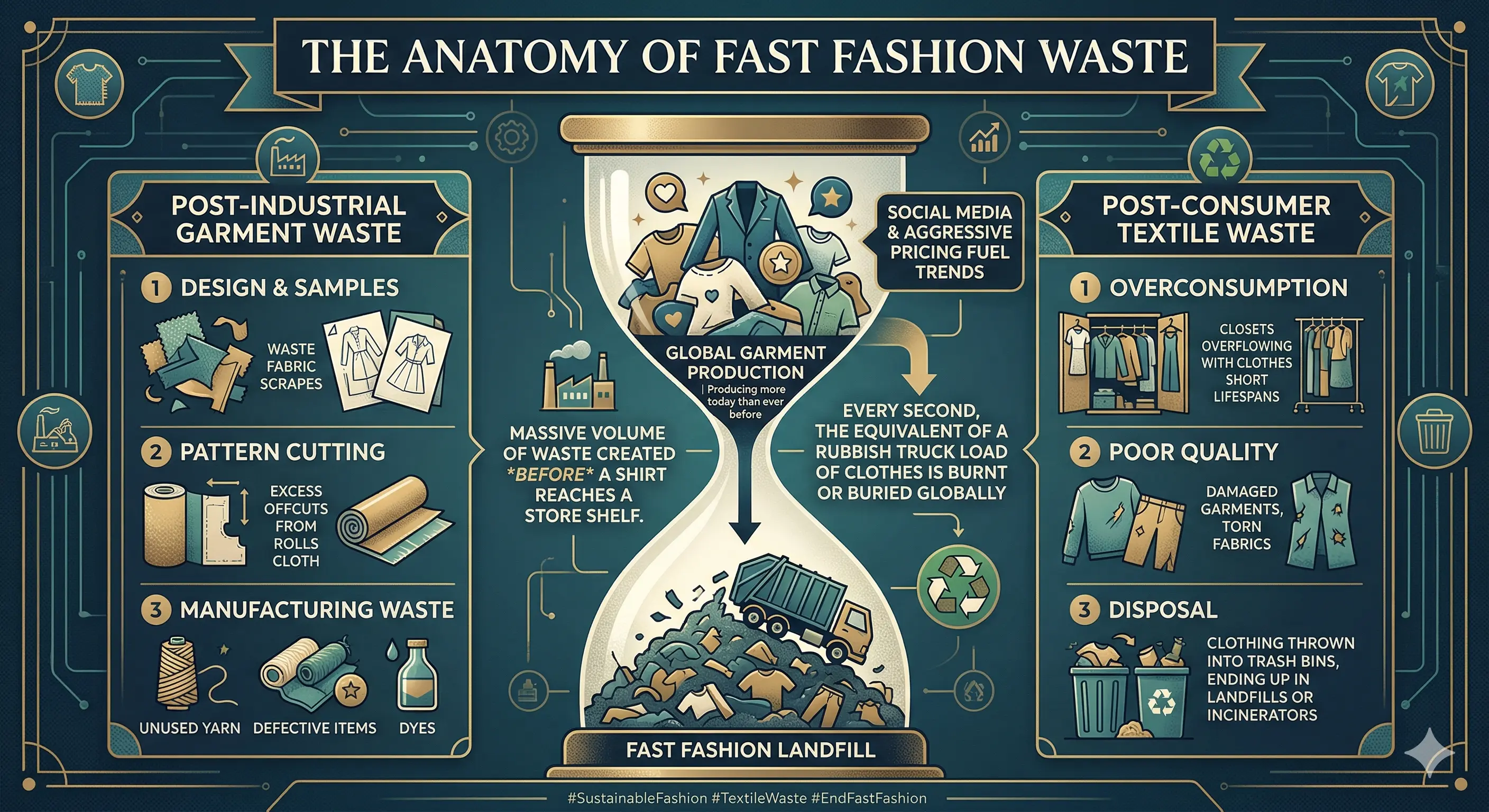
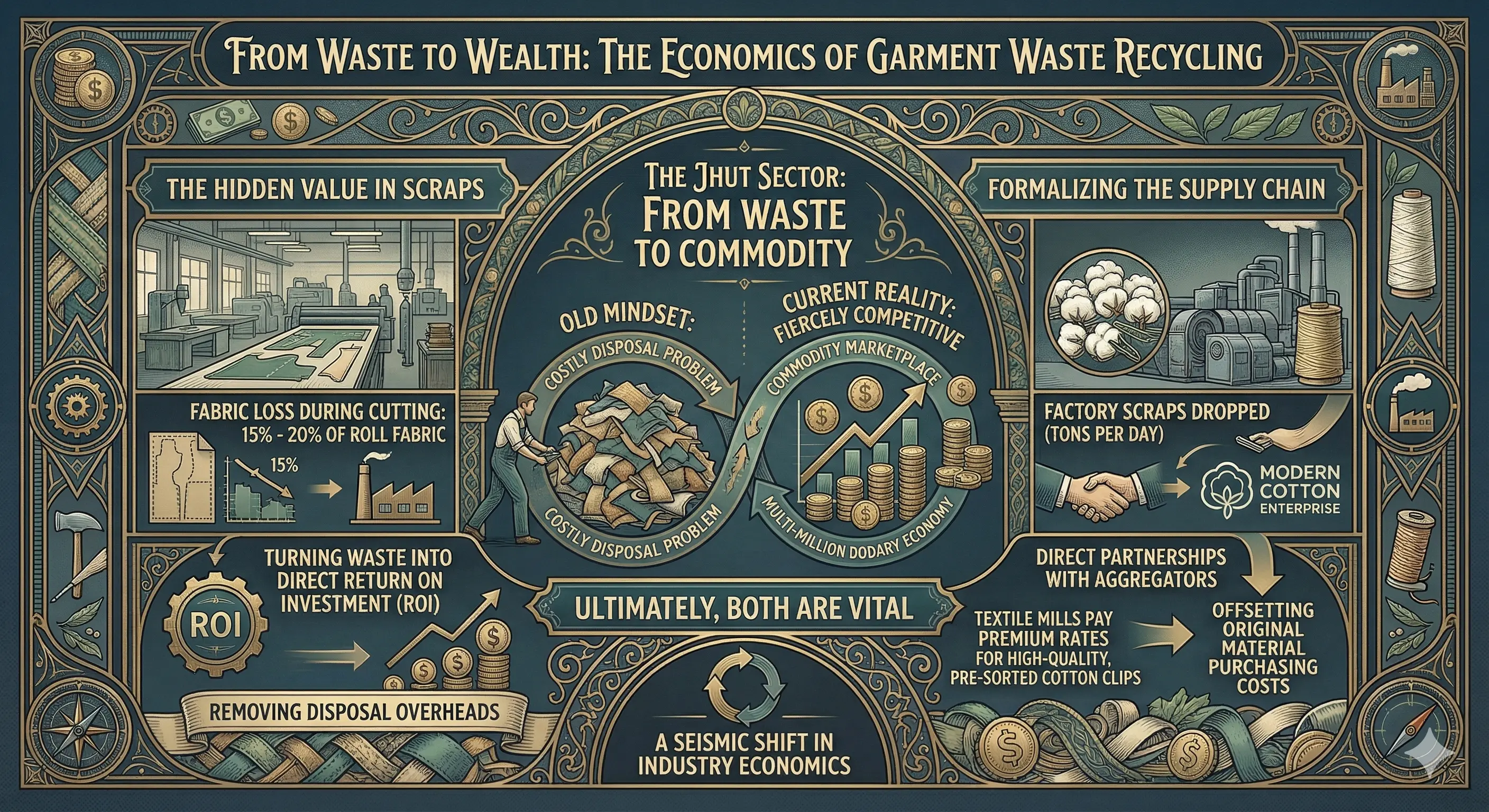
Historically, garment waste recycling (often called the Jhut sector in manufacturing hubs) was an informal, opaque business.
- Scraps left factories in unmarked trucks.
- They were mixed, contaminated with dirt, or blended with unknown synthetics.
- The resulting recycled yarn was low-quality, often used only for rugs or mattresses.
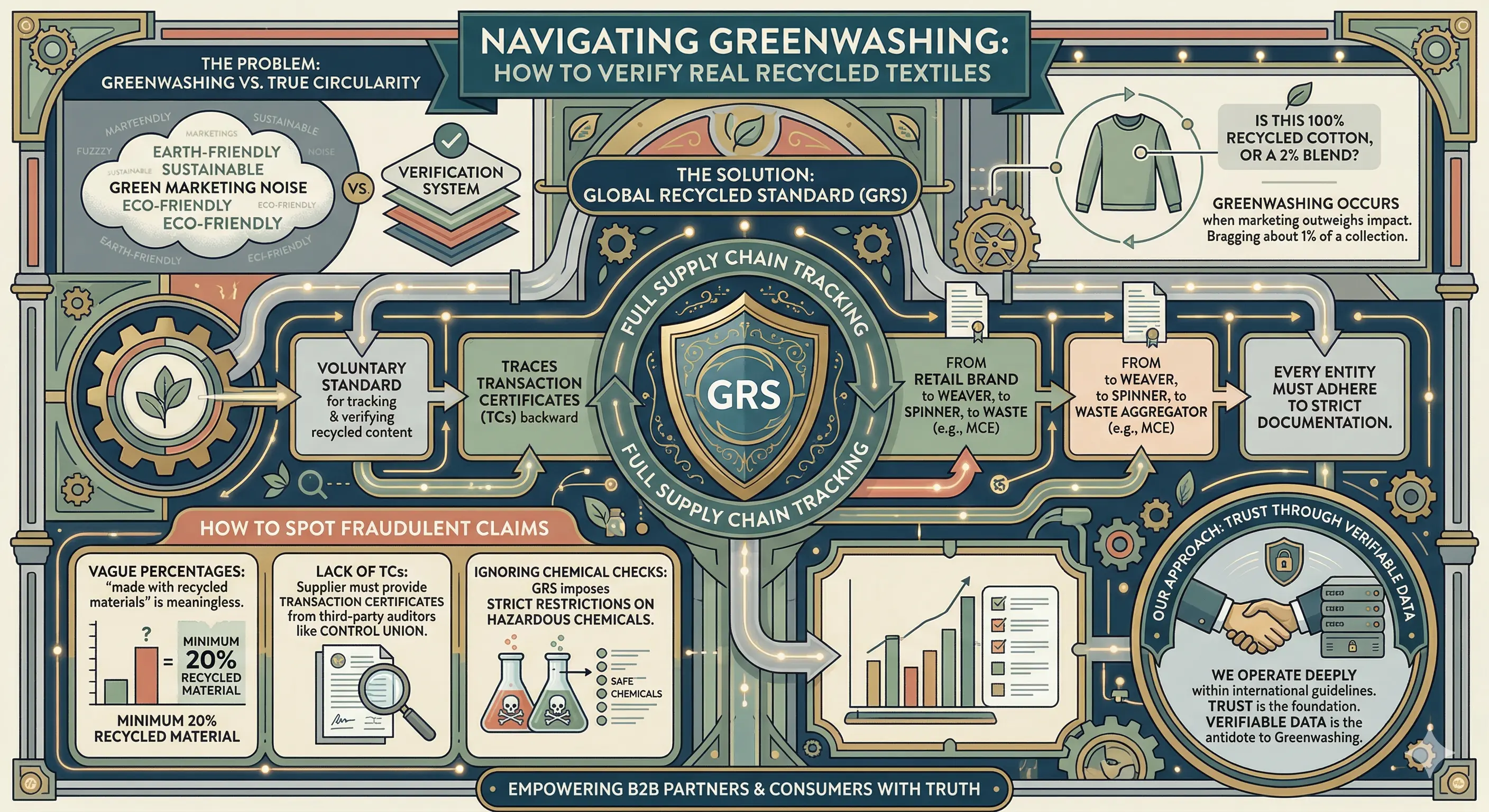
The Problem: Big brands today have 2030 Sustainability Goals. They want to use recycled cotton in high-end t-shirts and denim, not just rugs. To do that, they need purity and traceability. They cannot use "mystery waste."
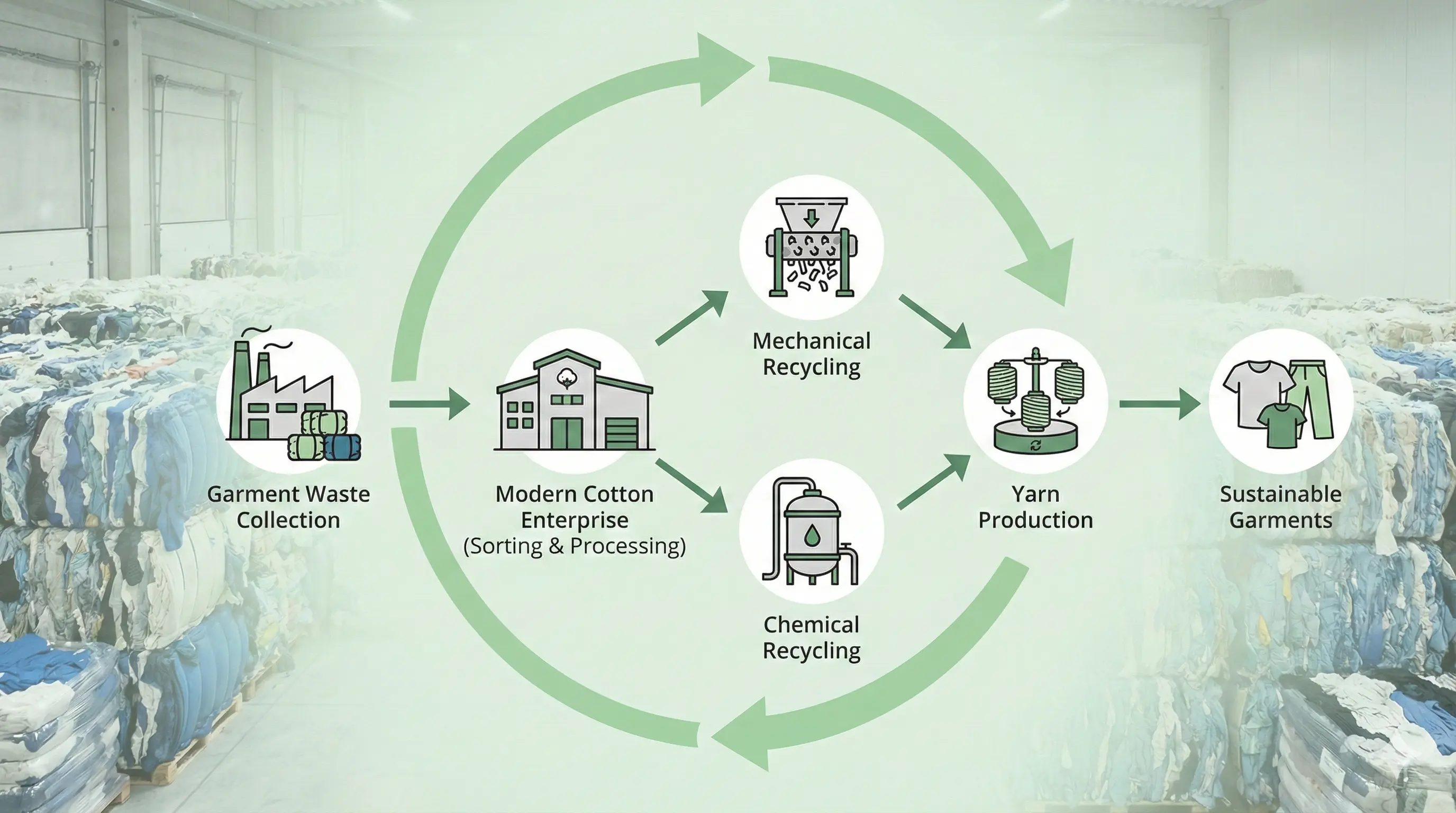
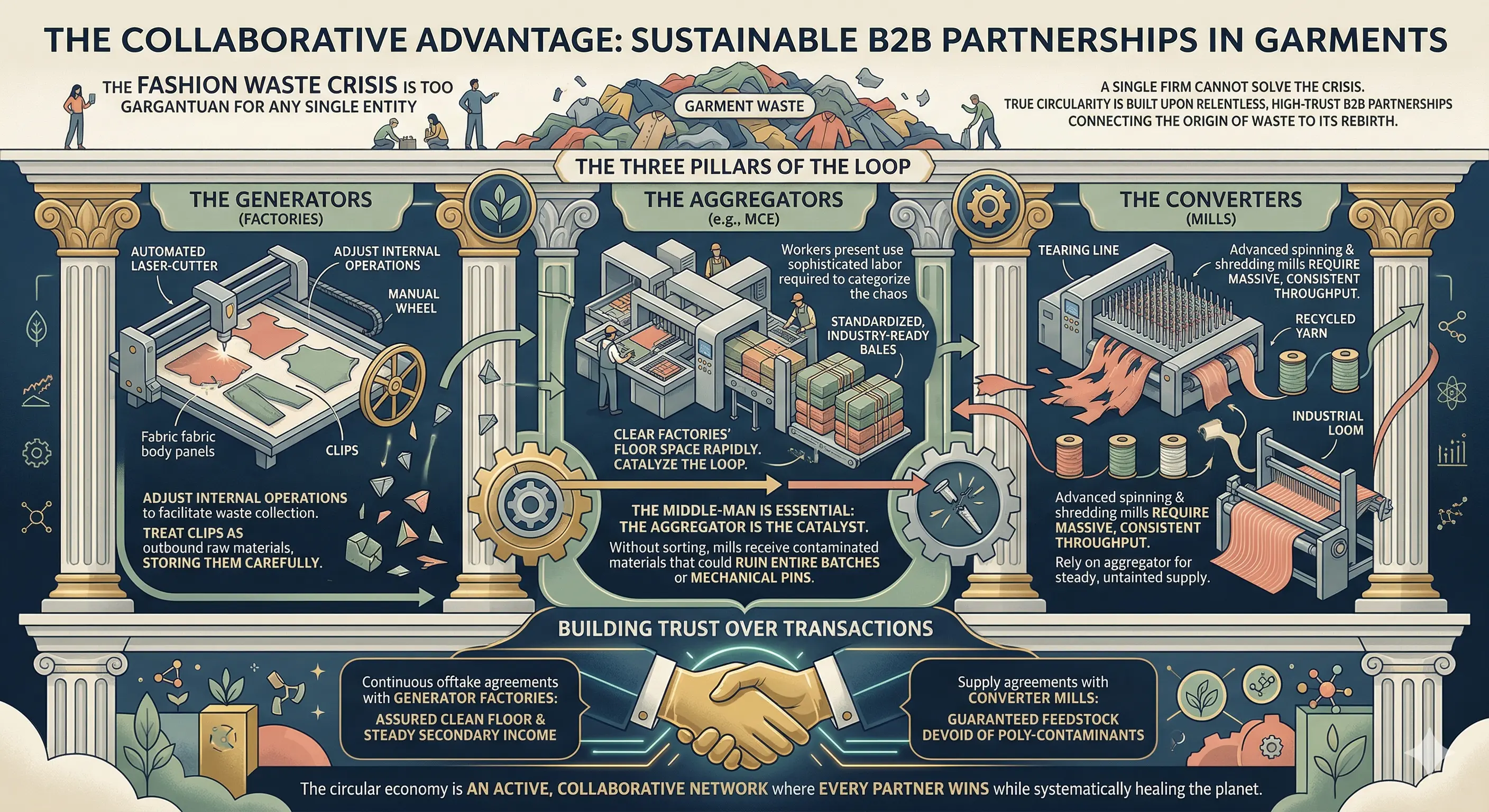
This is where the recyclers, like MCE, differentiates itself. The modern approach treats waste collection with the same rigor as raw material procurement.
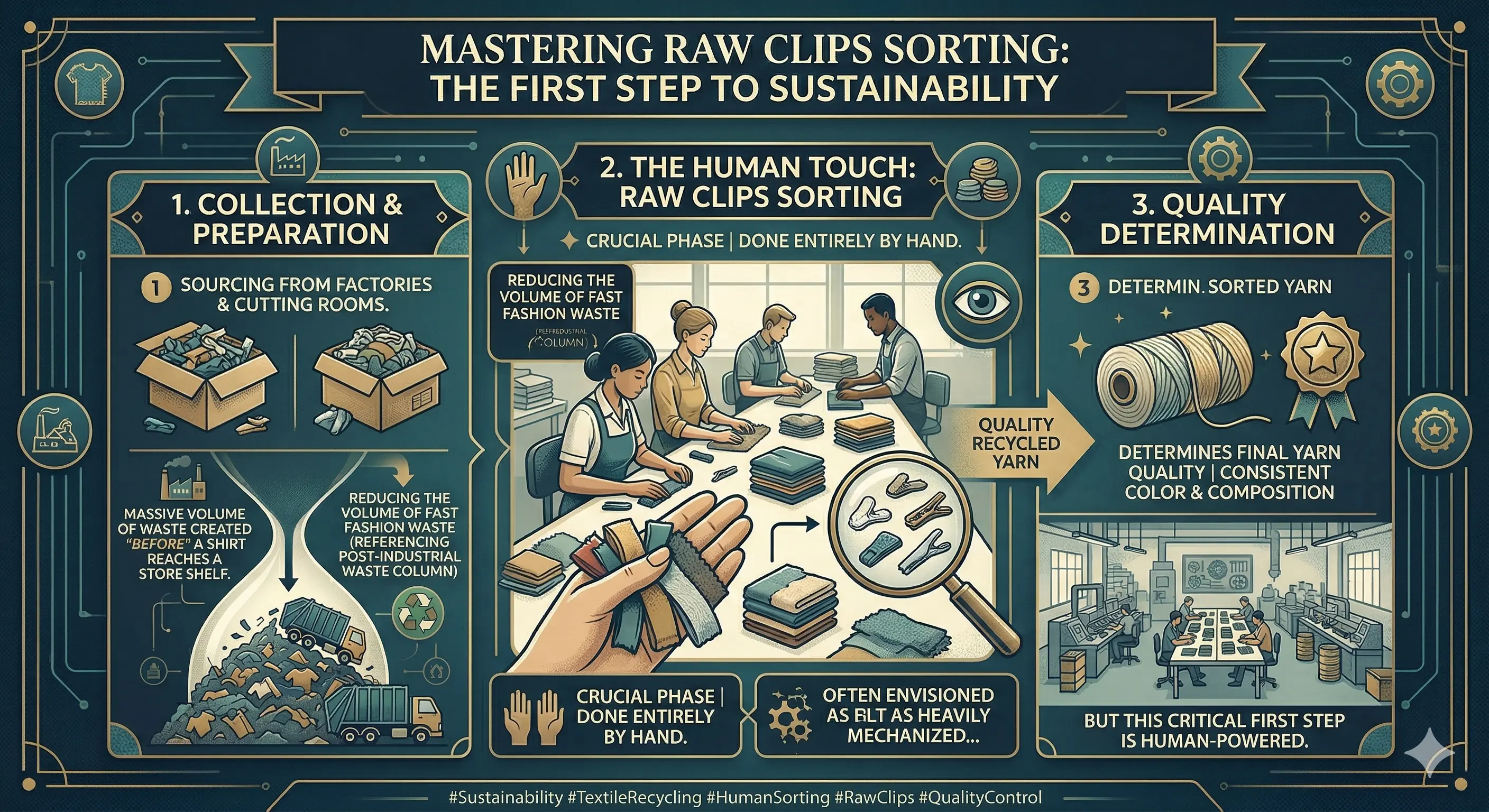
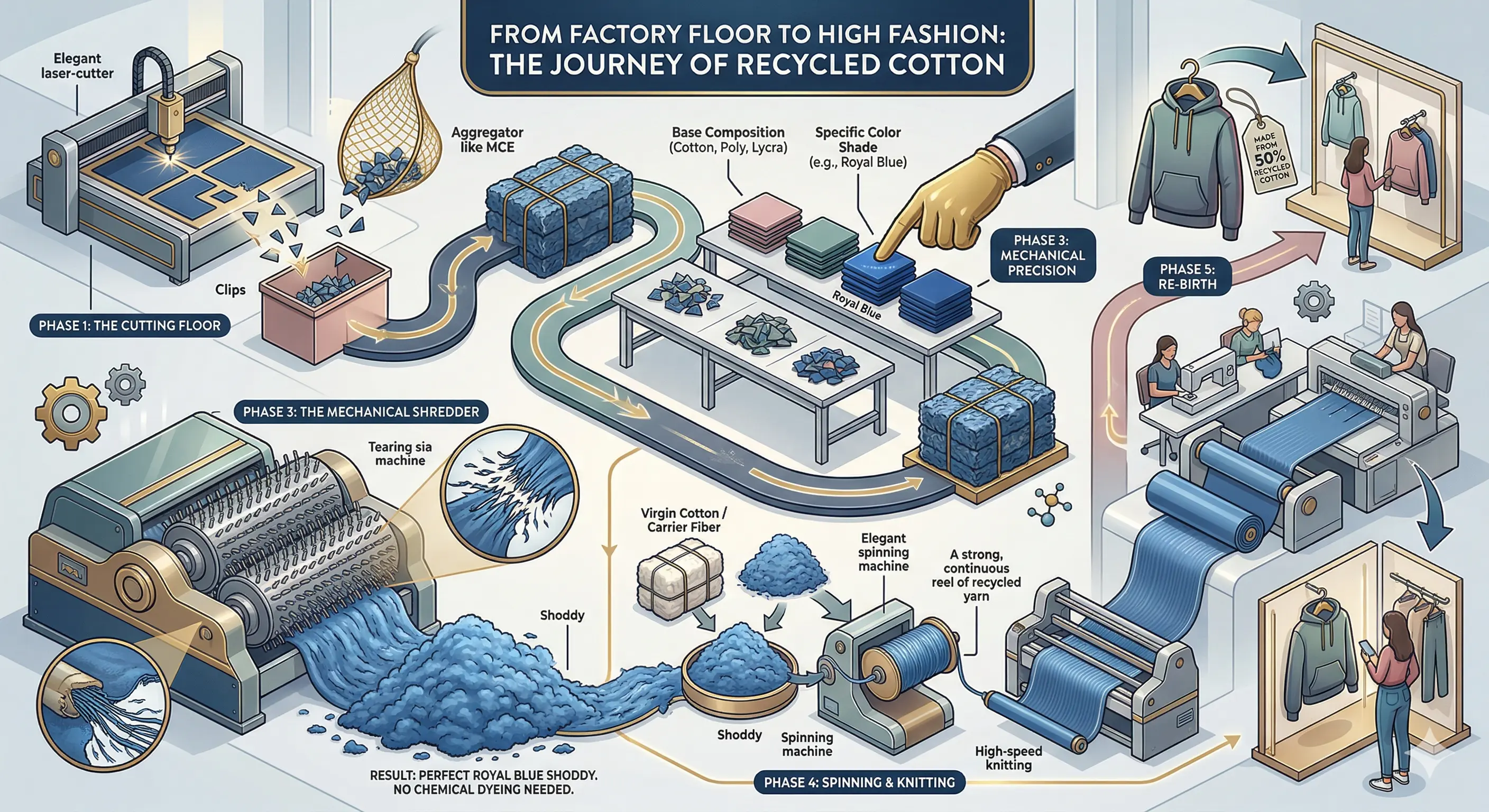
1. Source Segregation (The Golden Rule)The quality of recycled yarn is determined before the recycling machine even starts. It happens on the cutting floor.
- Old Way: Sweep everything (cotton, polyester, paper, floor dust) into one bag.
- MCE Way: Segregation at the source. 100% Cotton clips, Lycra, Polyester, TC, Viscose all are separated.
One of the massive advantages of pre-consumer recycling is that the fiber is already dyed. If you recycle blue denim scraps effectively, you get blue fiber without using a drop of water for dyeing.
- The Benefit: By sorting scraps strictly by color families (e.g., sorting "Navy Blue" separate from "Royal Blue"), MCE creates a feedstock that requires zero re-dyeing. This is arguably the most sustainable action in the entire textile lifecycle.
Why are global giants switching to this model? The data is undeniable.
- Carbon Footprint: Using mechanically recycled cotton can reduce the Global Warming Potential (GWP) by up to 80% compared to conventional cotton.
- Water Independence: Producing 1kg of virgin cotton can take up to 10,000 liters of water. Producing 1kg of mechanically recycled cotton takes almost zero.
We as an exporter and impacting the circularity by collecting the post industrial waste from garment factories and supplying to global leaders in recycling.
Recent Post

Sign Up For New Product News & Offers
Monthly Newsletter


Modern Cotton Enterprise (MCE) is a leading garment waste recycling and export company based in Bangladesh, dedicated to advancing circularity in the global textile industry.


Modern Cotton Enterprise © | All Rights Reserved