





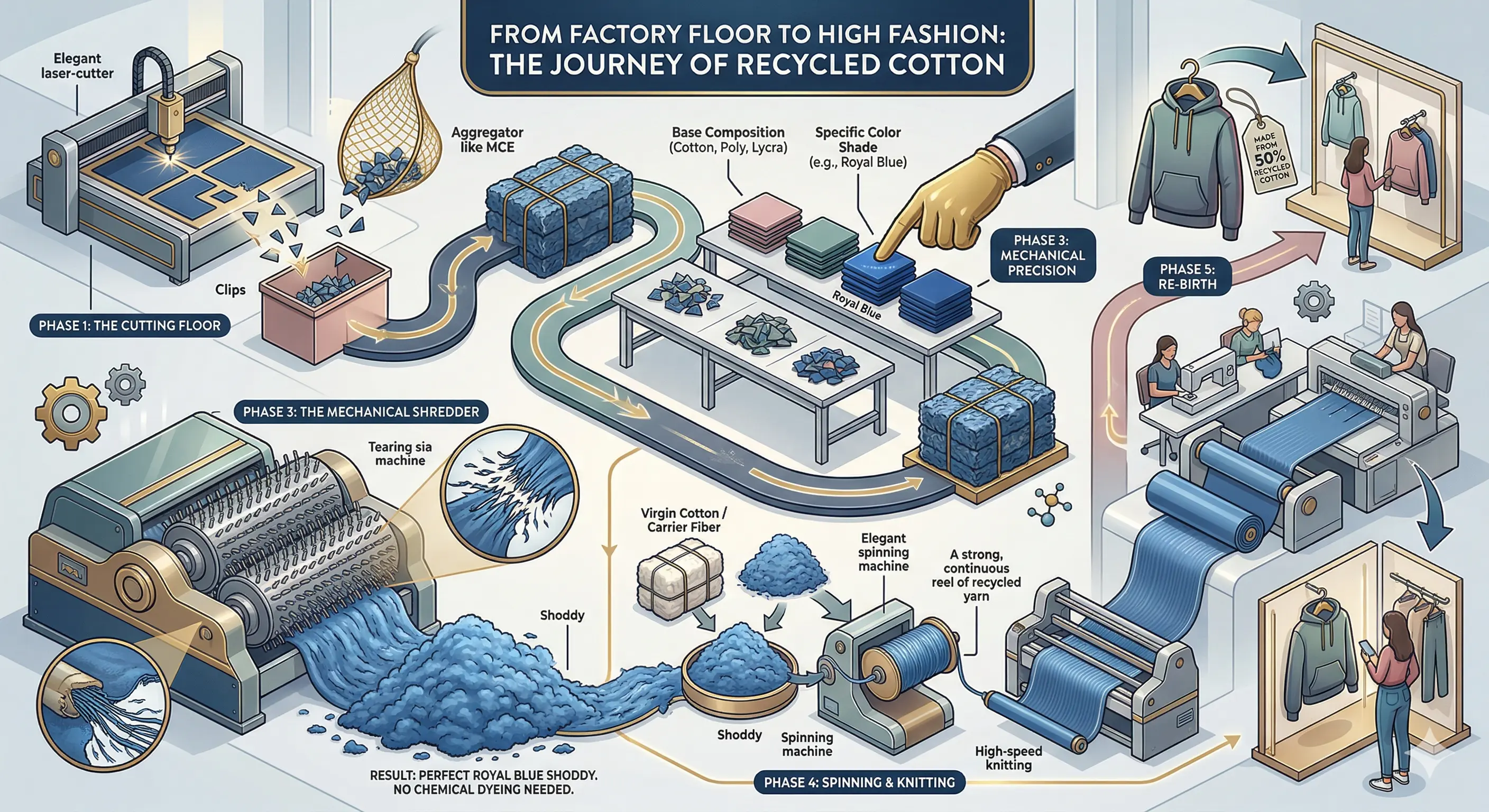
From Factory Floor to High Fashion: The Journey of Recycled Cotton
It is difficult to imagine that the pristine, sustainable Zara hoodie or H&M conscious-line t-shirt you bought recently might have started as a random fabric scrap drifting across an industrial cutting floor halfway around the world. But that is the remarkable reality of post-industrial recycling. Let's trace the exact supply chain journey of a recycled garment to understand the colossal effort behind the "recycled" tag.
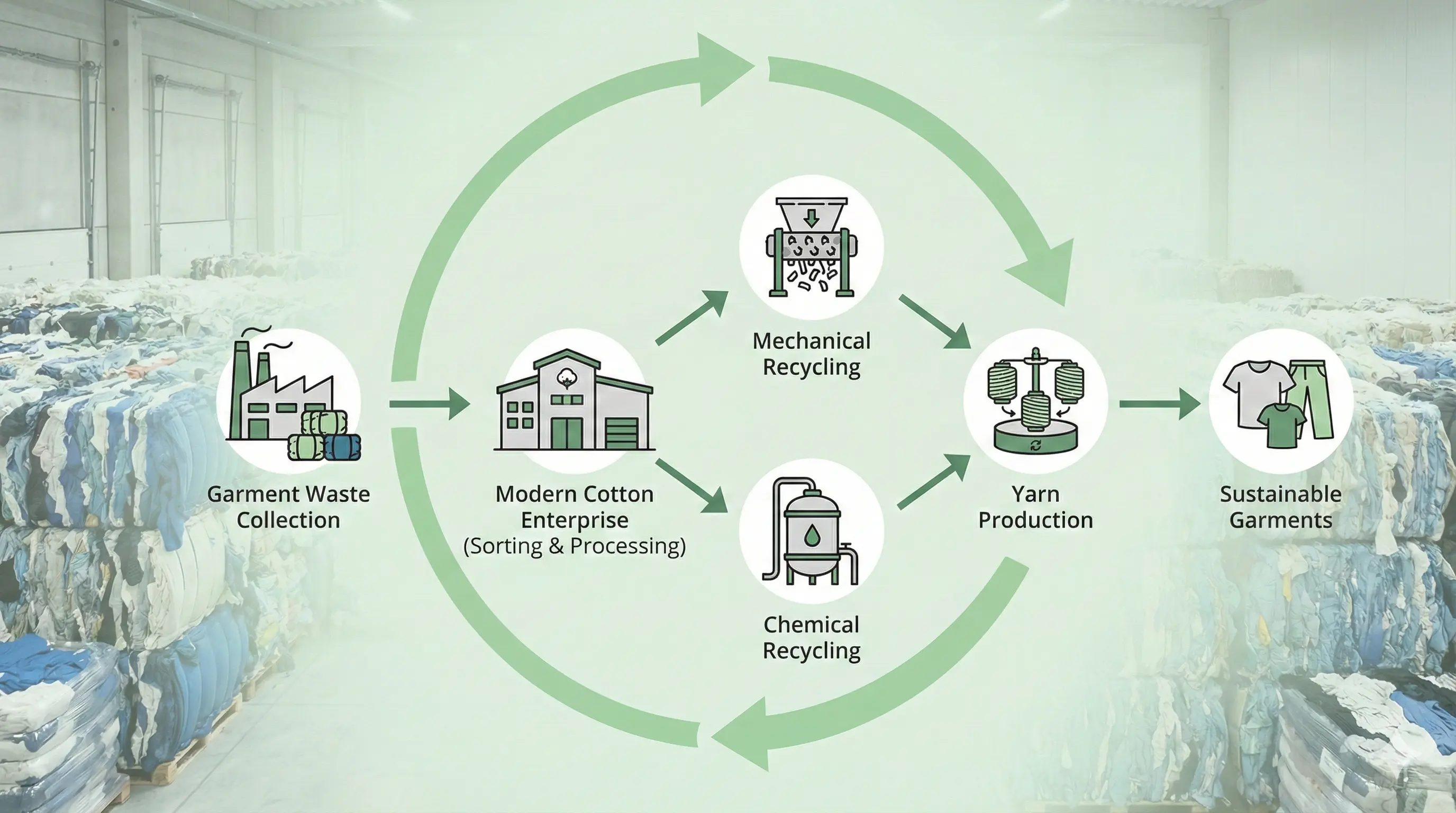
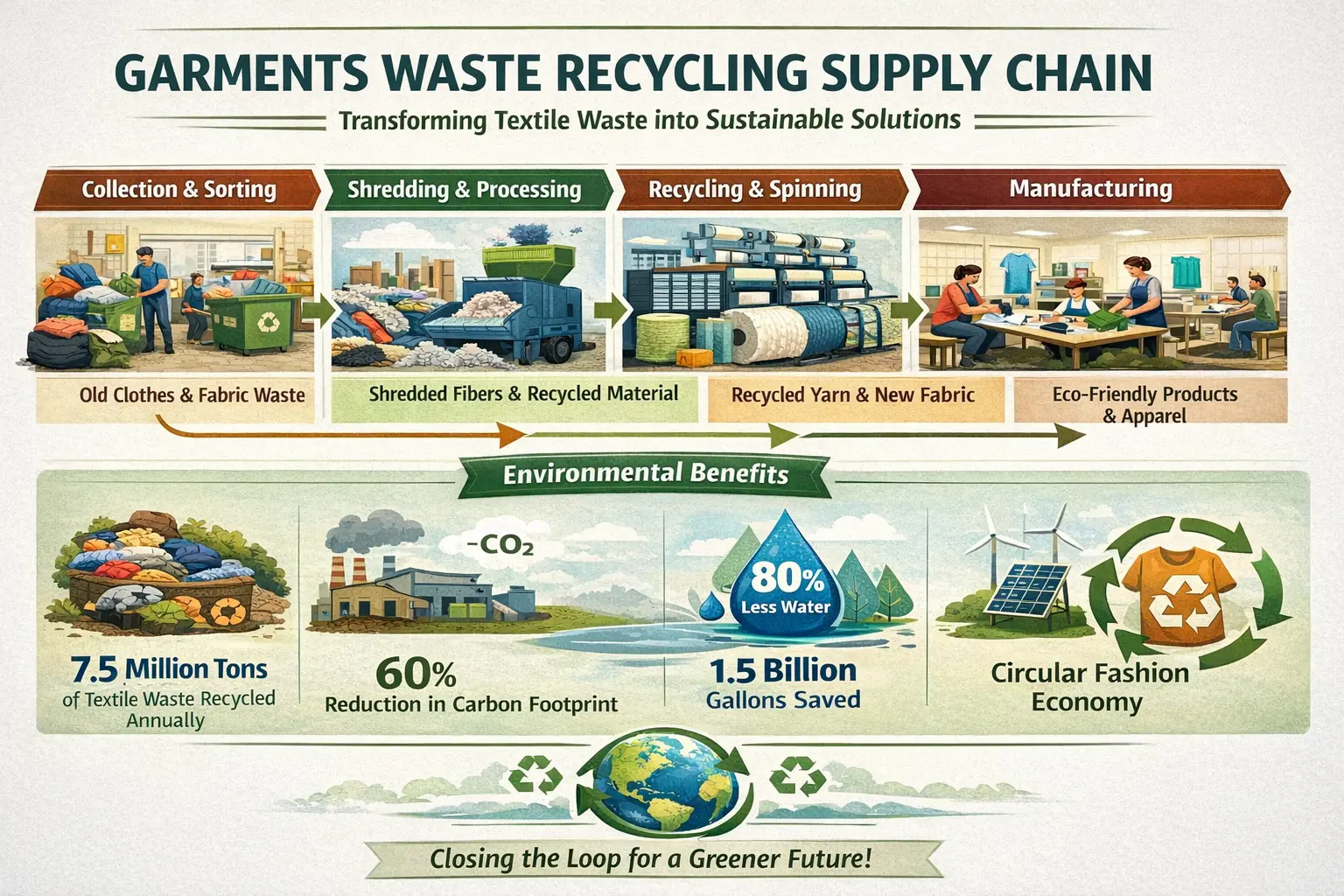
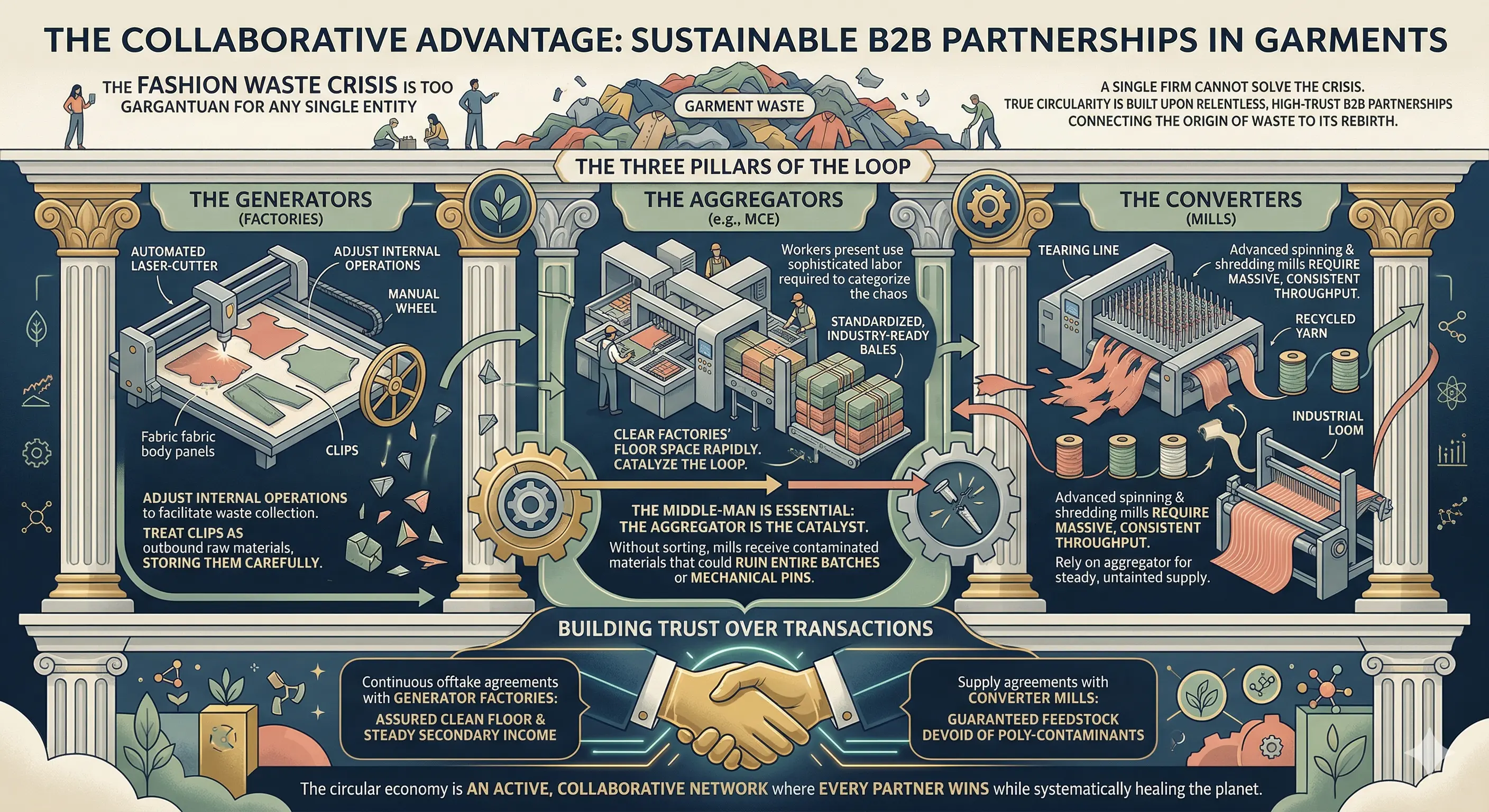
The journey from a discarded factory floor off-cut to a retail fashion item requires an intricate dance of global collaboration spanning aggregators, sorters, shredders, and spinners.
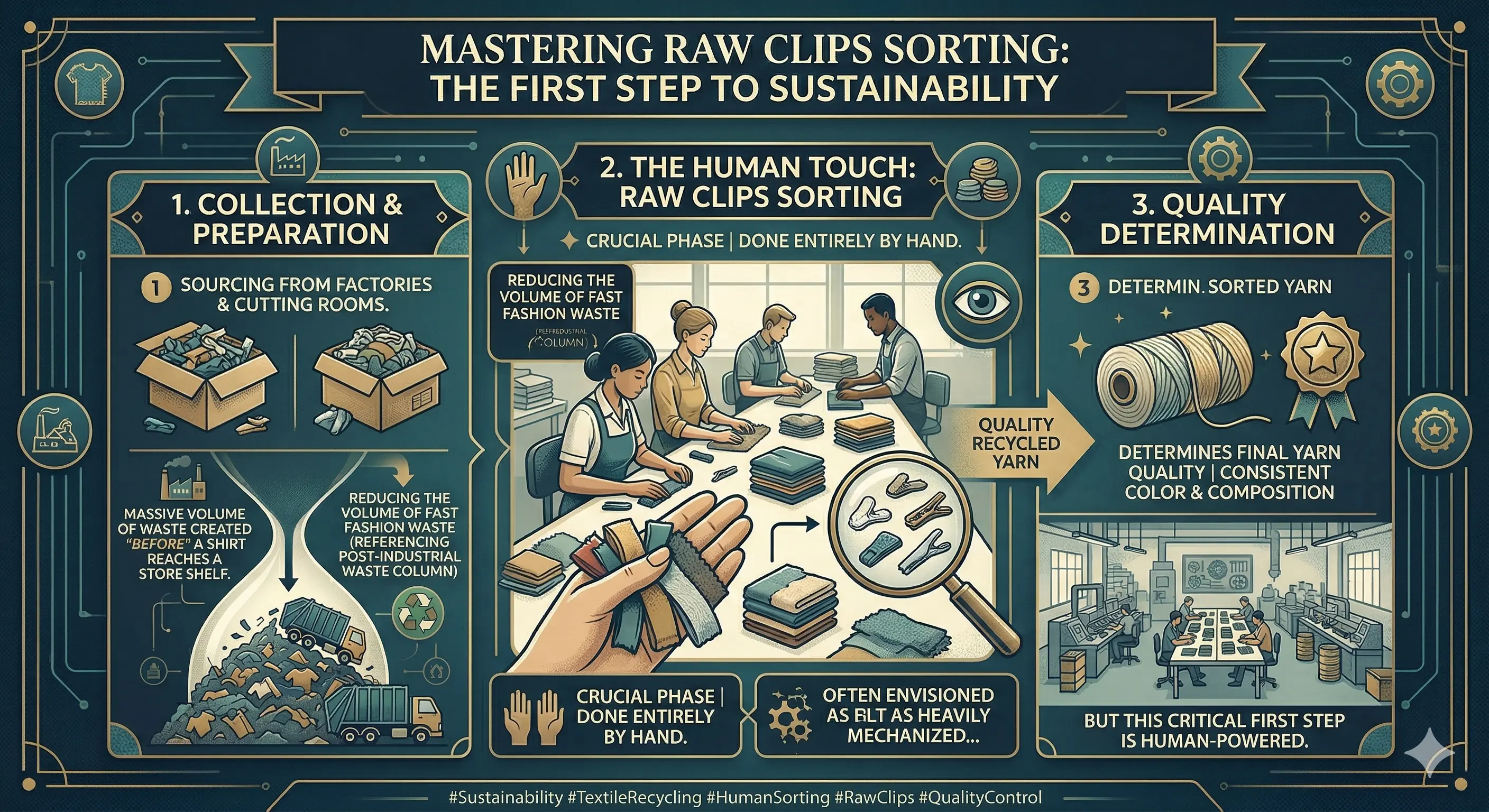
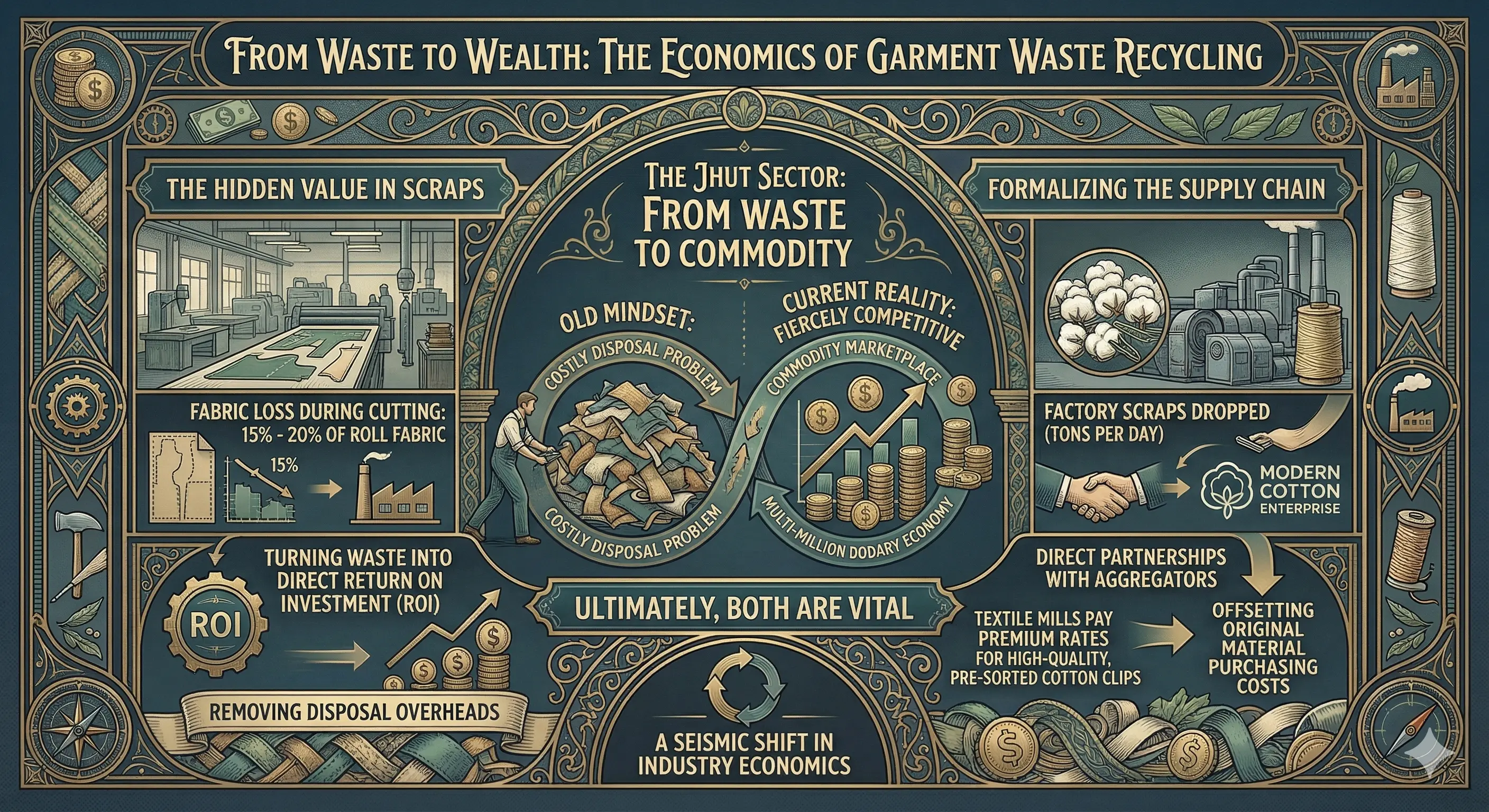
The journey begins in a primary manufacturing facility. As highly automated lasers or manual cutting wheels slice out the body panels of tens of thousands of t-shirts, small geometric slivers of fabric fall away. These are the clips. Before they can be thrown into general waste, an aggregator like MCE swoops in to intercept them.
Phase 2: The Sorting HubThe clips arrive at a specialized sorting hub in giant bales. Here, the magic of taxonomy occurs. The clips are manually separated based on their base composition (Cotton, Poly, Lycra) and their specific color shade (e.g., Royal Blue). The precision here dictates the quality of the rest of the journey. Once sorted, the clips are hydraulically pressed into dense, 300-kilogram bales.
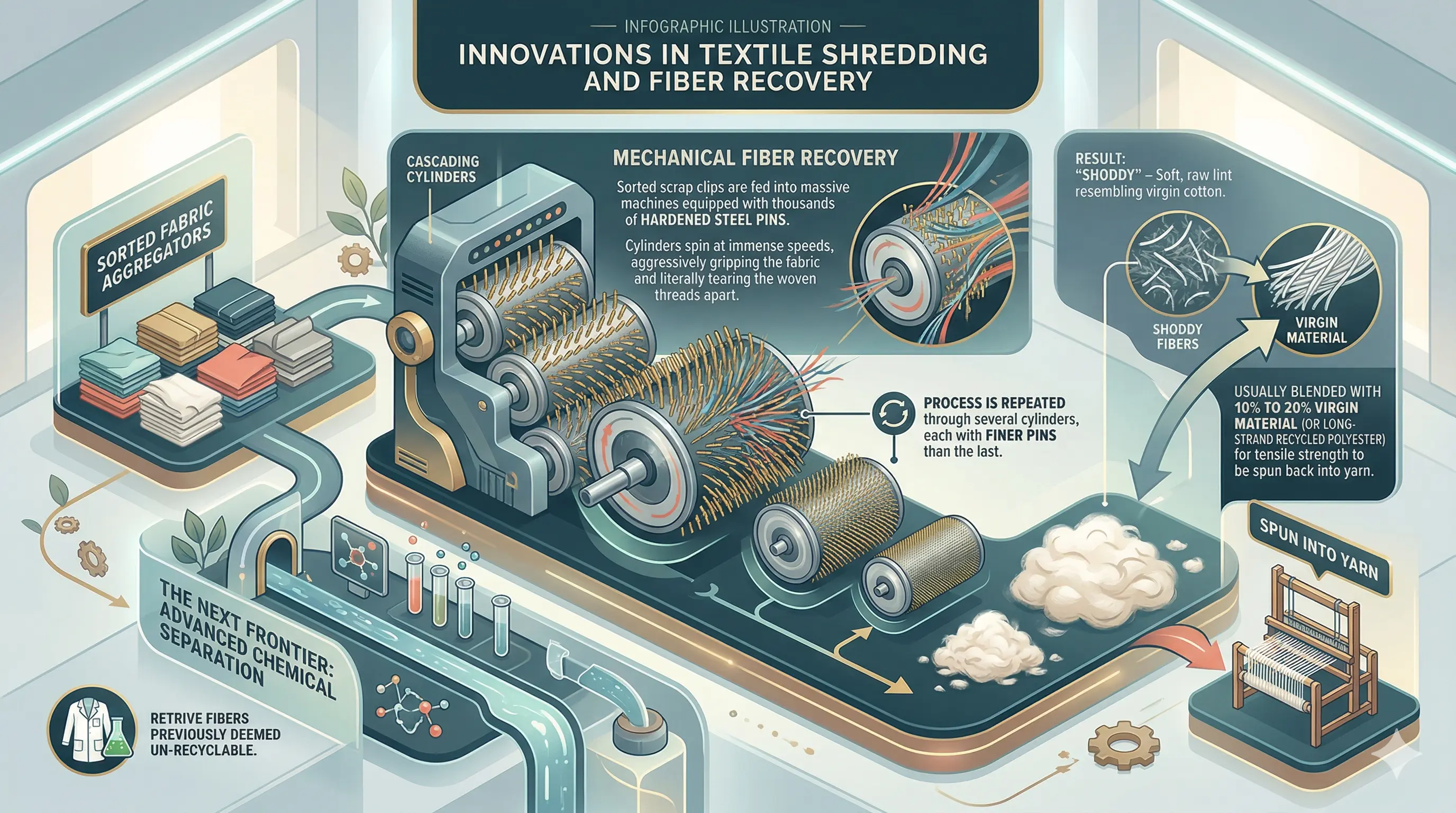
Phase 3: The Mechanical ShredderThe bales are shipped to a recycling mill. A massive "tearing line" grabs the clips and pulls them through rotating steel cylinders covered in pins. The fabric is shredded relentlessly until the woven structure surrenders, leaving behind a massive pile of soft, fluffy blue cotton lint called "shoddy." Crucially, because it was color-sorted in Phase 2, this shoddy is already a perfect royal blue. No chemical dyeing is needed.
Phase 4: Spinning & KnittingBecause mechanical tearing slightly shortens the fiber strands, the shoddy is fed into a spinning machine alongside a small percentage of virgin cotton or synthetic carrier fiber to act as a skeletal structure. The machine spins these elements together, drawing them out into a strong, continuous reel of recycled yarn. This yarn is then sent to a knitting mill where it is woven into fresh fabric yardage.
Phase 5: Re-birthThe new fabric roll arrives at a brand new factory. It is cut, sewn, tagged with a "Made from 50% Recycled Cotton" label, shipped to a retail store in Europe or North America, and bought by a conscious consumer. A full circular loop, completed.
Recent Post

Sign Up For New Product News & Offers
Monthly Newsletter


Modern Cotton Enterprise (MCE) is a leading garment waste recycling and export company based in Bangladesh, dedicated to advancing circularity in the global textile industry.


Modern Cotton Enterprise © | All Rights Reserved