





The Collaborative Advantage: Sustainable B2B Partnerships in Garments
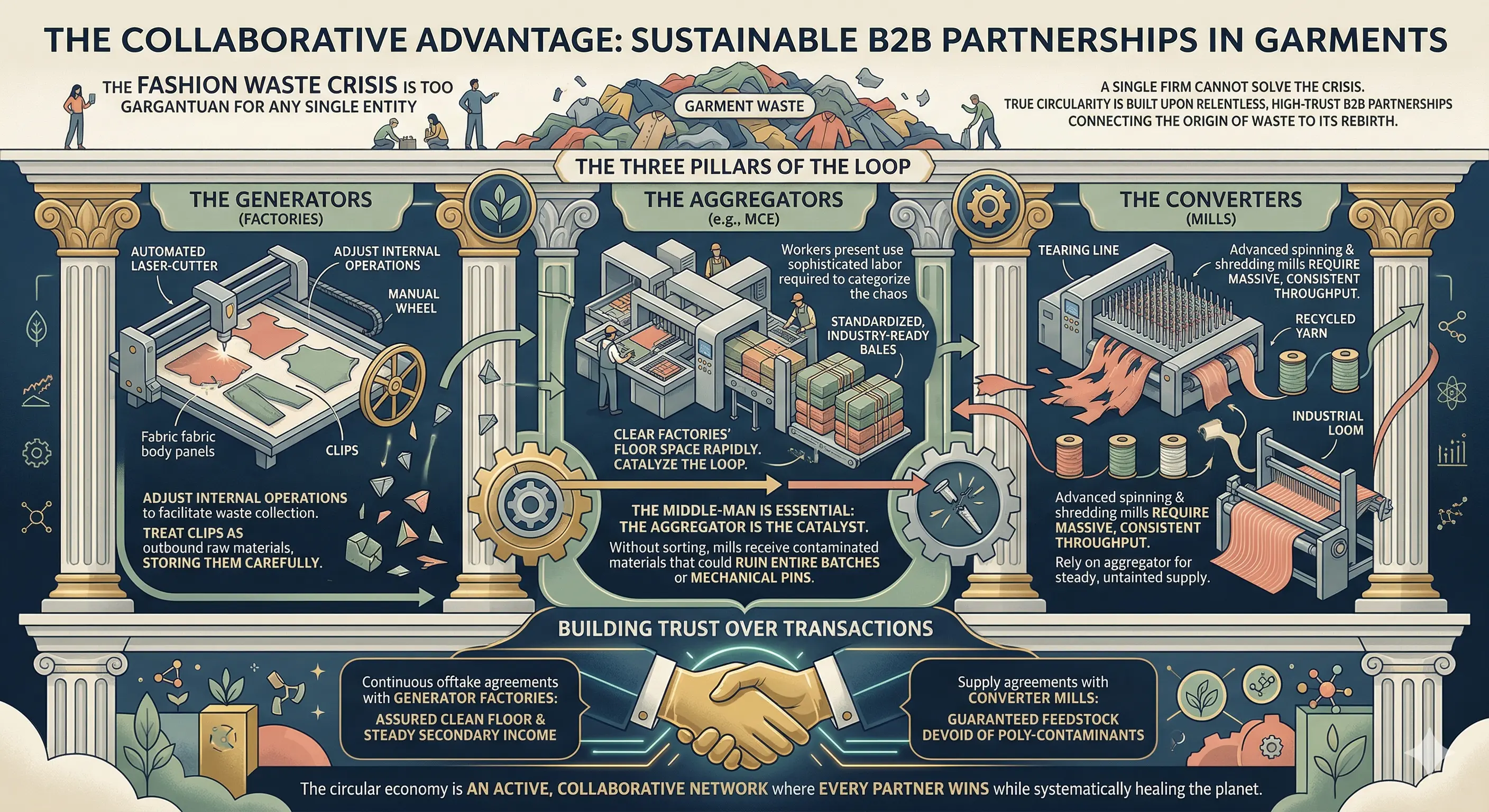
The fashion waste crisis is too gargantuan for any single entity to tackle. A factory cannot recycle its own waste internally, a spinning mill cannot magically summon sorted feedstock, and a global retail brand cannot hand-pick scraps. It takes an intricate ecosystem of strategic, transparent alignments to create a functional closed loop. This is the power of the Collaborative Advantage.
No single firm can solve the fashion waste crisis alone. True circularity is built upon relentless, high-trust B2B partnerships connecting the origin of waste to its rebirth.
A successful circular supply chain relies on three distinct, interdependent pillars working in harmony:
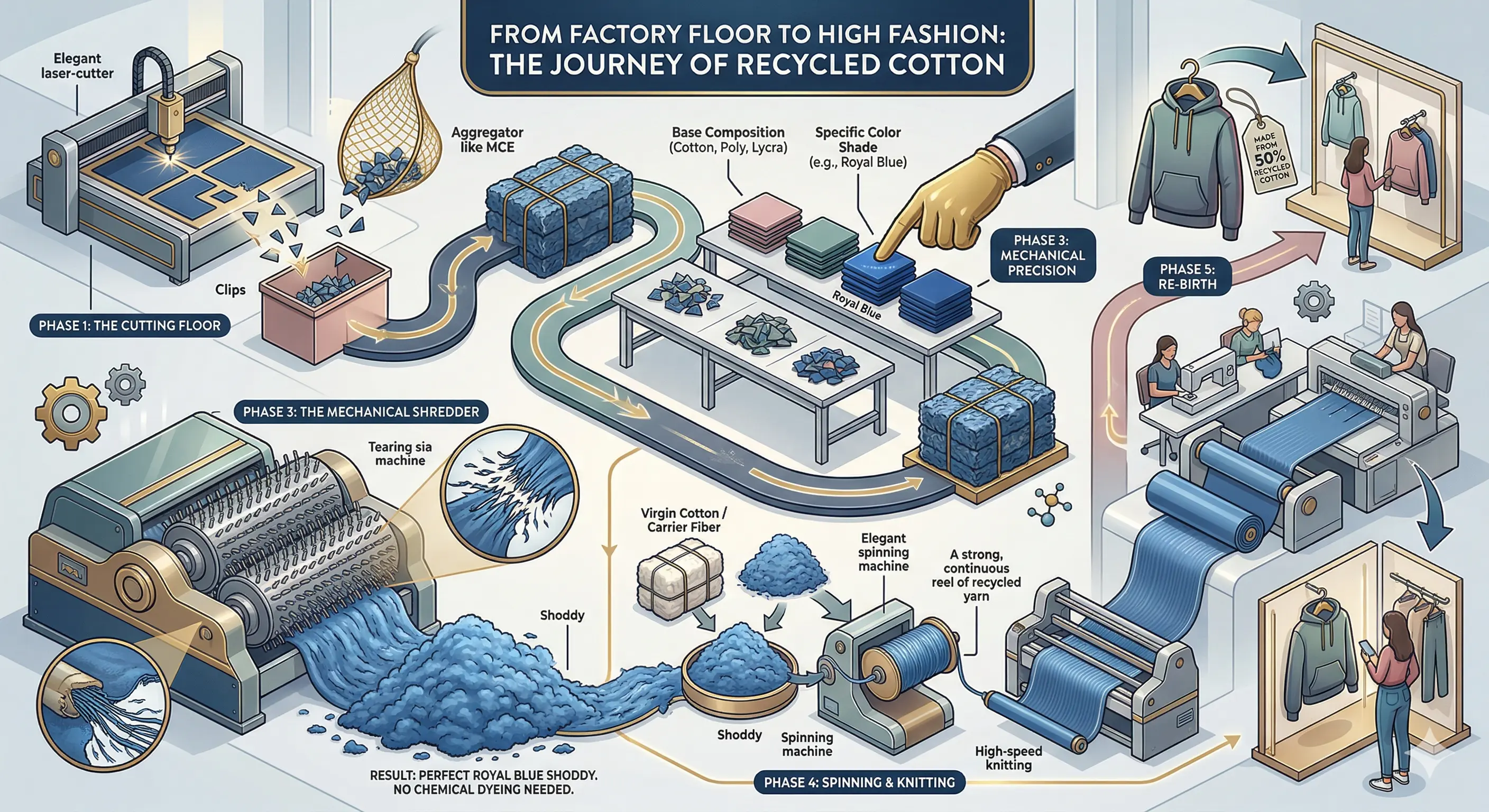
- The Generators (Factories): Garment manufacturers must adjust internal operations to facilitate waste collection. Instead of treating clips as trash, they must treat them as outbound raw materials, storing them carefully away from dirt and water.
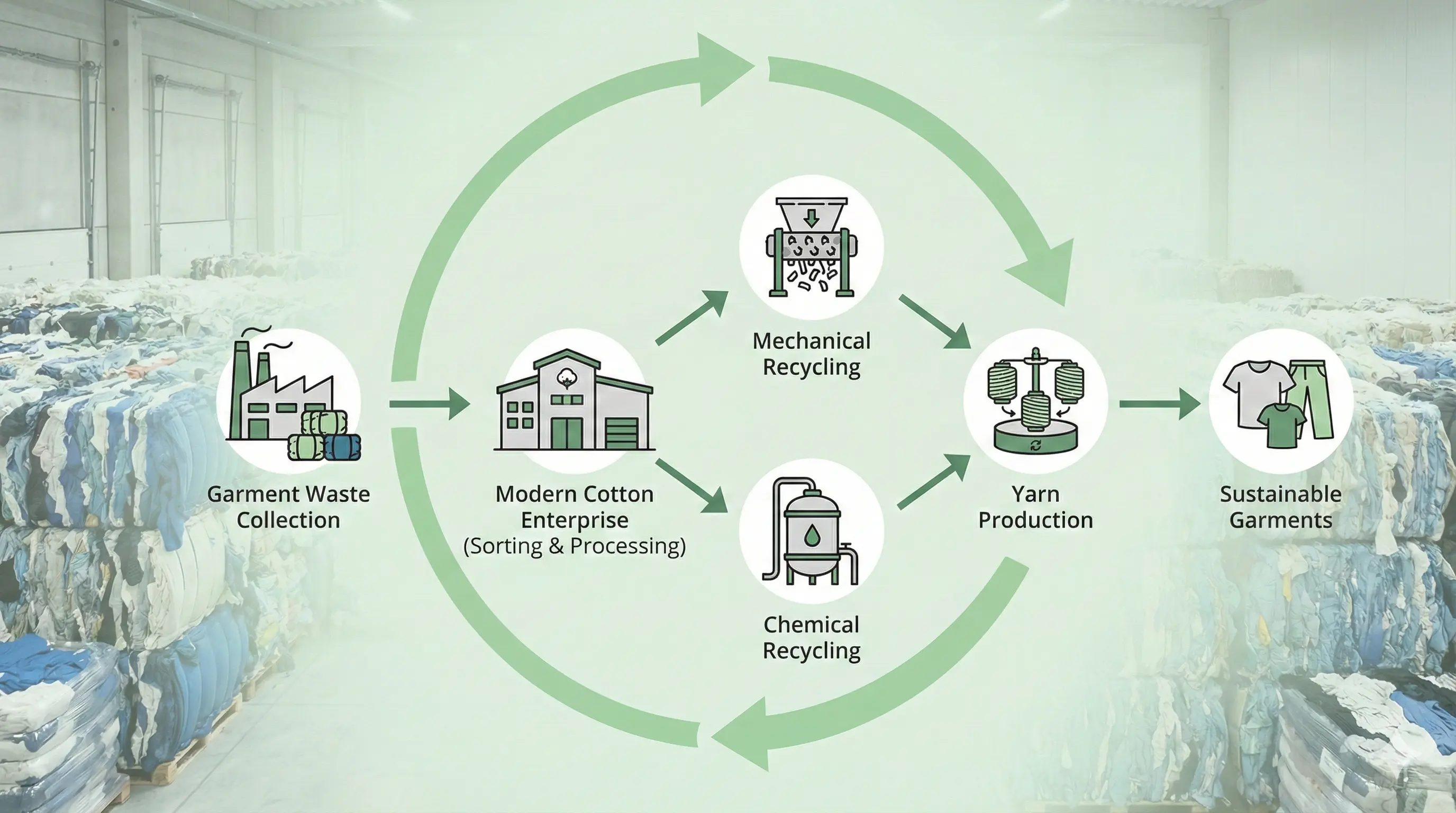
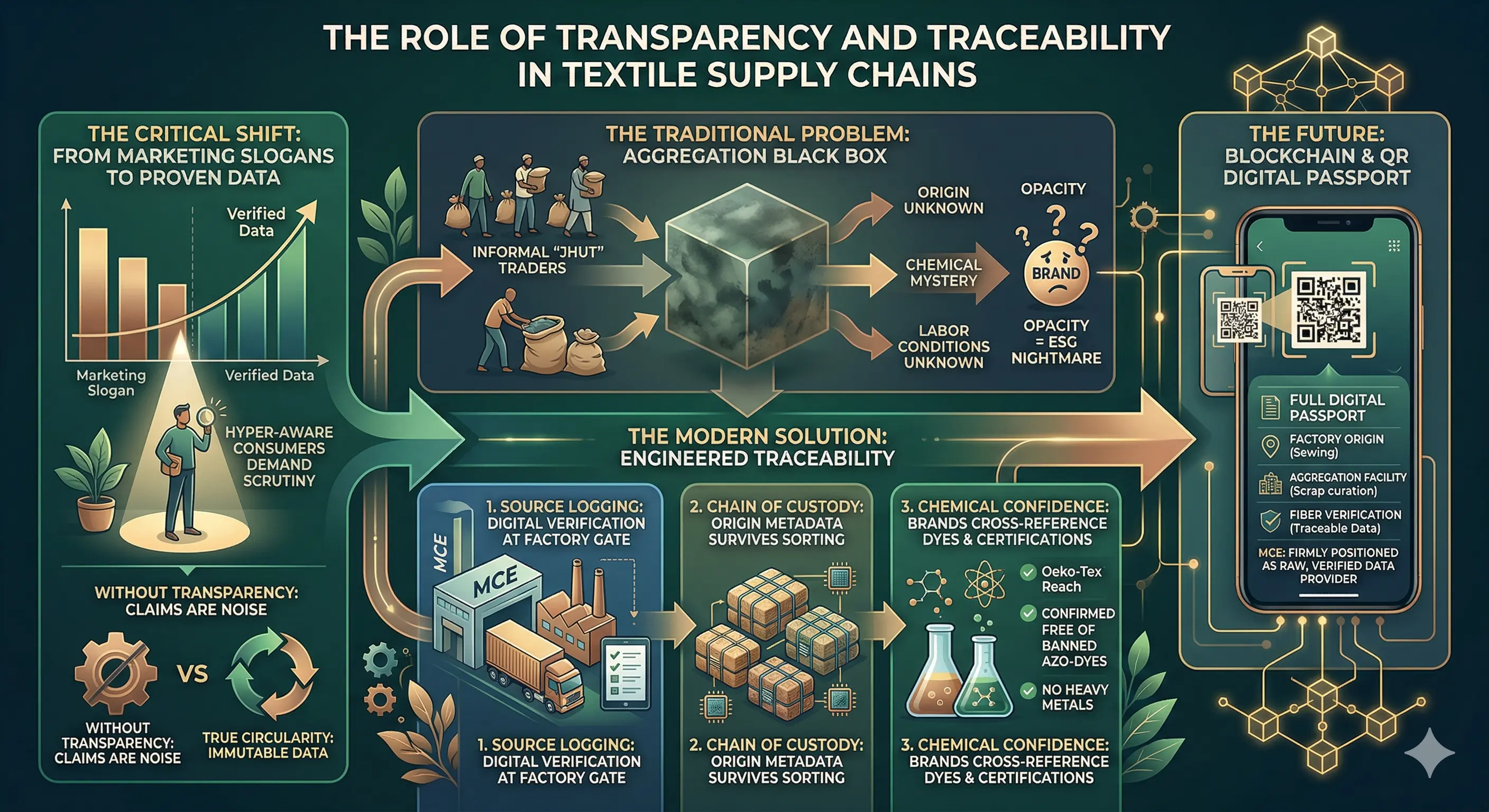
- The Aggregators (MCE): Companies like us act as the vital bridge. We clear the factories' floor space rapidly, provide the sophisticated labor required to categorize the chaos, and bundle it into standardized, industry-ready bales.
- The Converters (Mills): Advanced spinning and shredding mills require massive, consistent throughput to remain profitable. They rely on the aggregator for a steady, untainted supply of sorted clips to keep their machines running.
In many industries, the goal is to cut out the middle-man. But in the garment recycling sector, the aggregator *is* the catalyst. Without an aggregator possessing specific textile knowledge executing the sorting phase, the converters would receive highly contaminated materials that could shatter their mechanical pins or ruin an entire batch of spun yarn.
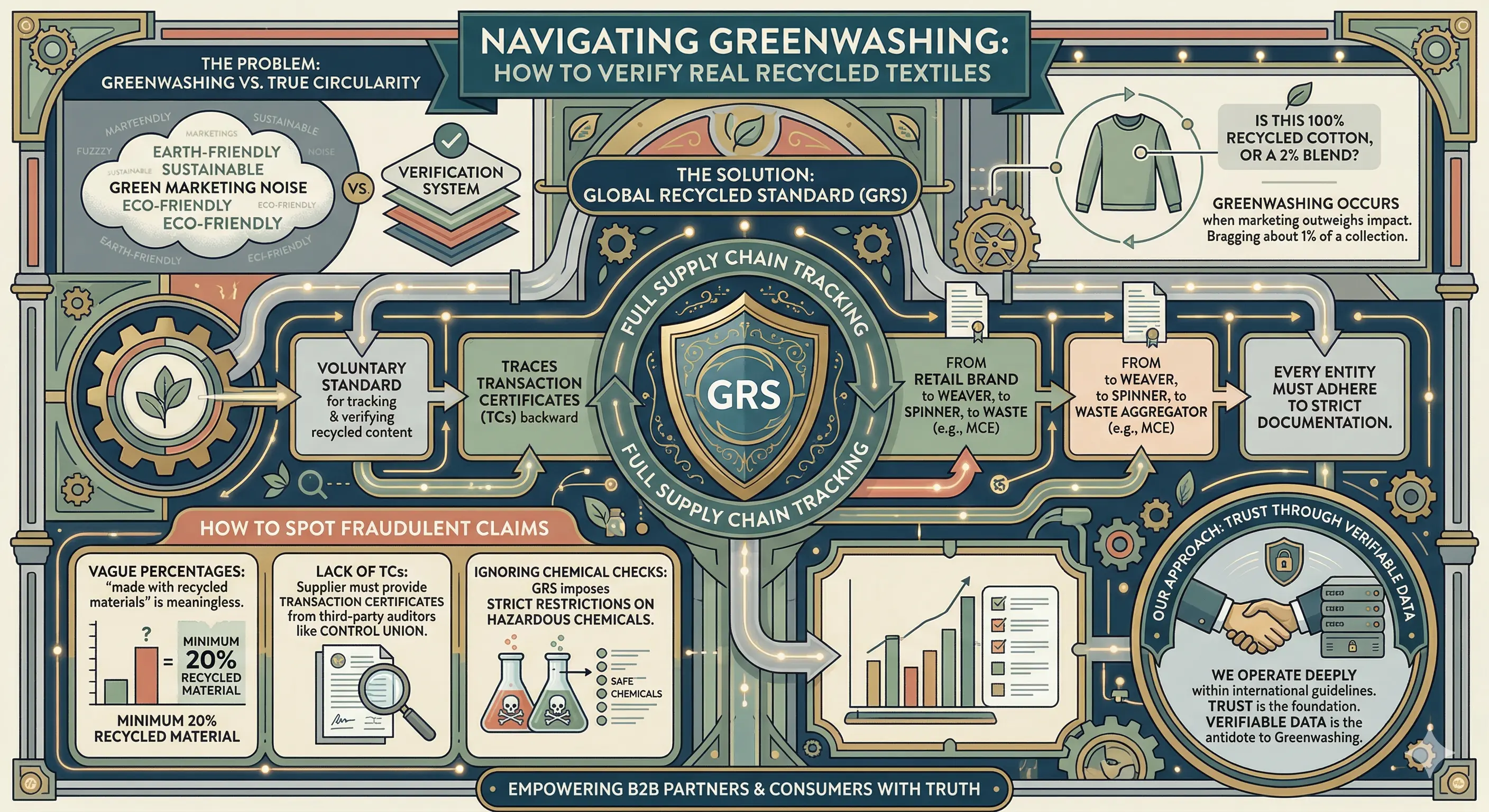
Building Trust over TransactionsAt MCE, our entire business model thrives on long-term B2B alliances rather than sheer transactional volume. By signing continuous offtake agreements with garment factories, they are assured of a clean factory floor and steady secondary income. By signing supply agreements with recycling mills, they are guaranteed a feedstock devoid of poly-contaminants.
The circular economy isn't an abstract philosophy—it is an active, collaborative network where every commercial partner wins while systematically healing the planet.
Recent Post

Sign Up For New Product News & Offers
Monthly Newsletter


Modern Cotton Enterprise (MCE) is a leading garment waste recycling and export company based in Bangladesh, dedicated to advancing circularity in the global textile industry.


Modern Cotton Enterprise © | All Rights Reserved