





Closing the Loop: How Garment Waste Recycling is Redefining the Cotton Value Chain
The global fashion industry is undergoing a seismic shift. For decades, the dominant model has been linear: take natural resources, make products, and dispose of them when trends change. This "fast fashion" approach has created an environmental crisis, with textiles being one of the largest contributors to landfill waste and resource depletion globally.
The antidote to this unsustainable trajectory is the Circular Economy. In the context of textiles, circularity means moving away from the "end-of-life" concept and towards a system where waste is designed out, products are kept in use for longer, and raw materials are continuously regenerated.
This article explores the mechanics of garments waste recycling, its profound impact on sustainability, and how forward-thinking players like the "Modern Cotton Enterprise" (MCE) are building the necessary value chains to make circularity a reality.
The transition from a linear to a circular fashion economy is no longer optional. It is an ecological necessity.
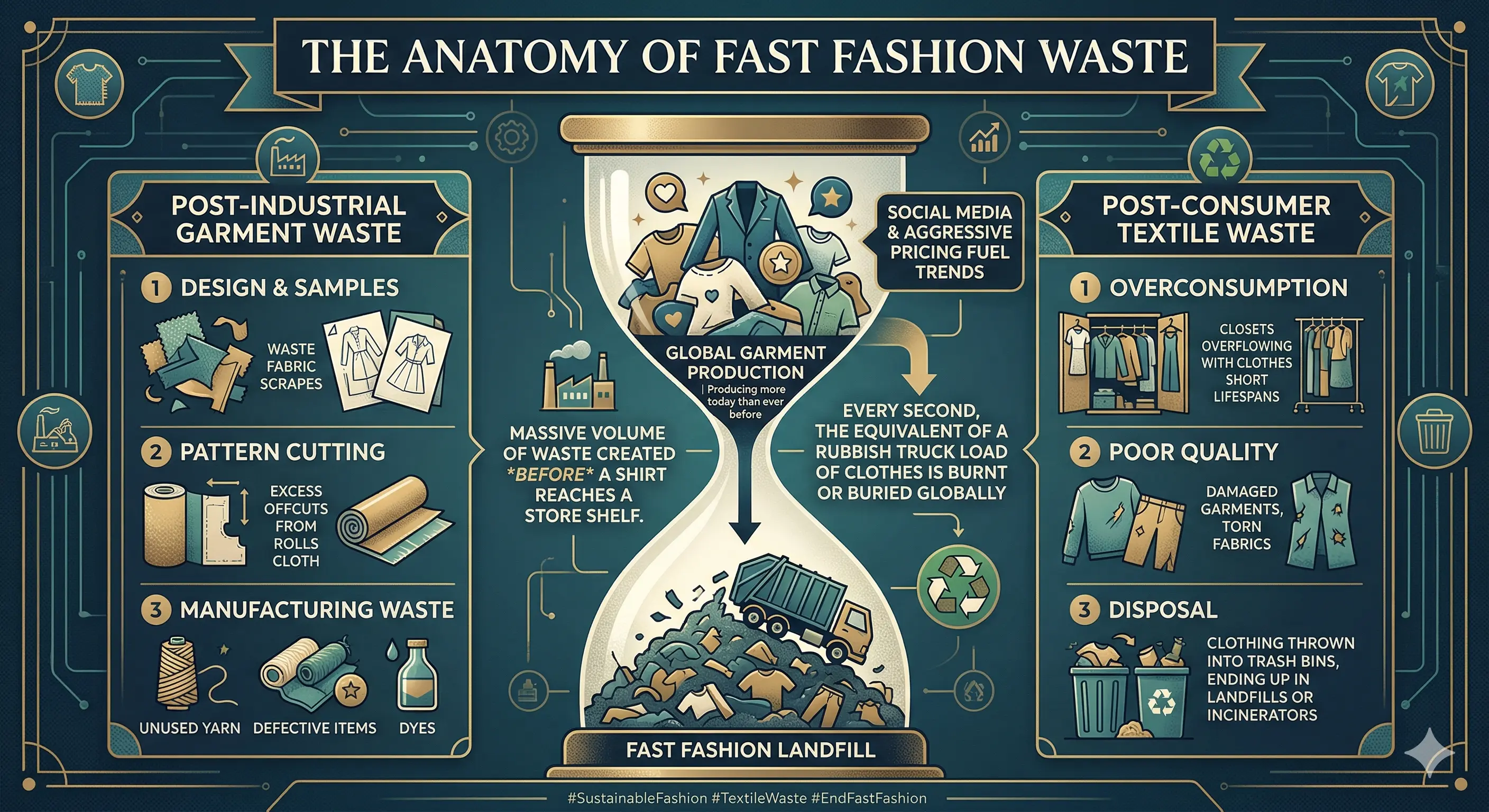
To understand recycling, we must first understand the waste stream. Garment waste generally falls into two categories:
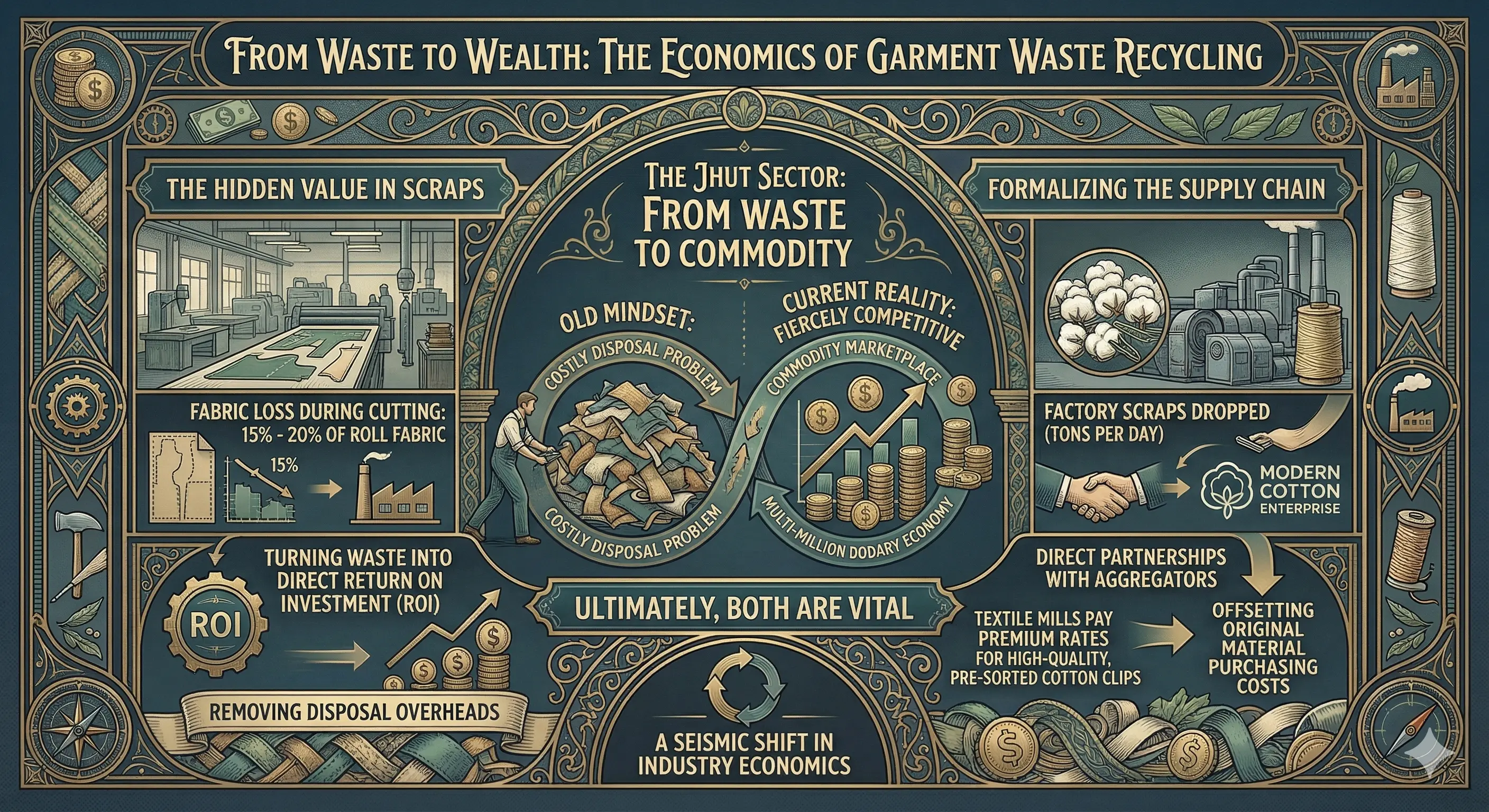
- Pre-Consumer (Post-Industrial) Waste: This is the "cleanest" waste. It includes fabric scraps from cutting tables in garment factories, leftover fabric rolls (deadstock), and defective samples. For a cotton enterprise, this is gold dust because it is often 100% cotton, already dyed, and free from consumer contaminants.
- Post-Consumer Waste: These are the clothes discarded by consumers. This stream is much harder to manage due to blends (e.g., cotton mixed with elastane), buttons, zippers, and varying degrees of wear and tear.
While both are important, modern cotton recycling enterprises currently focus heavily on scaling up pre-consumer solutions due to higher efficiency and fiber quality outcomes.
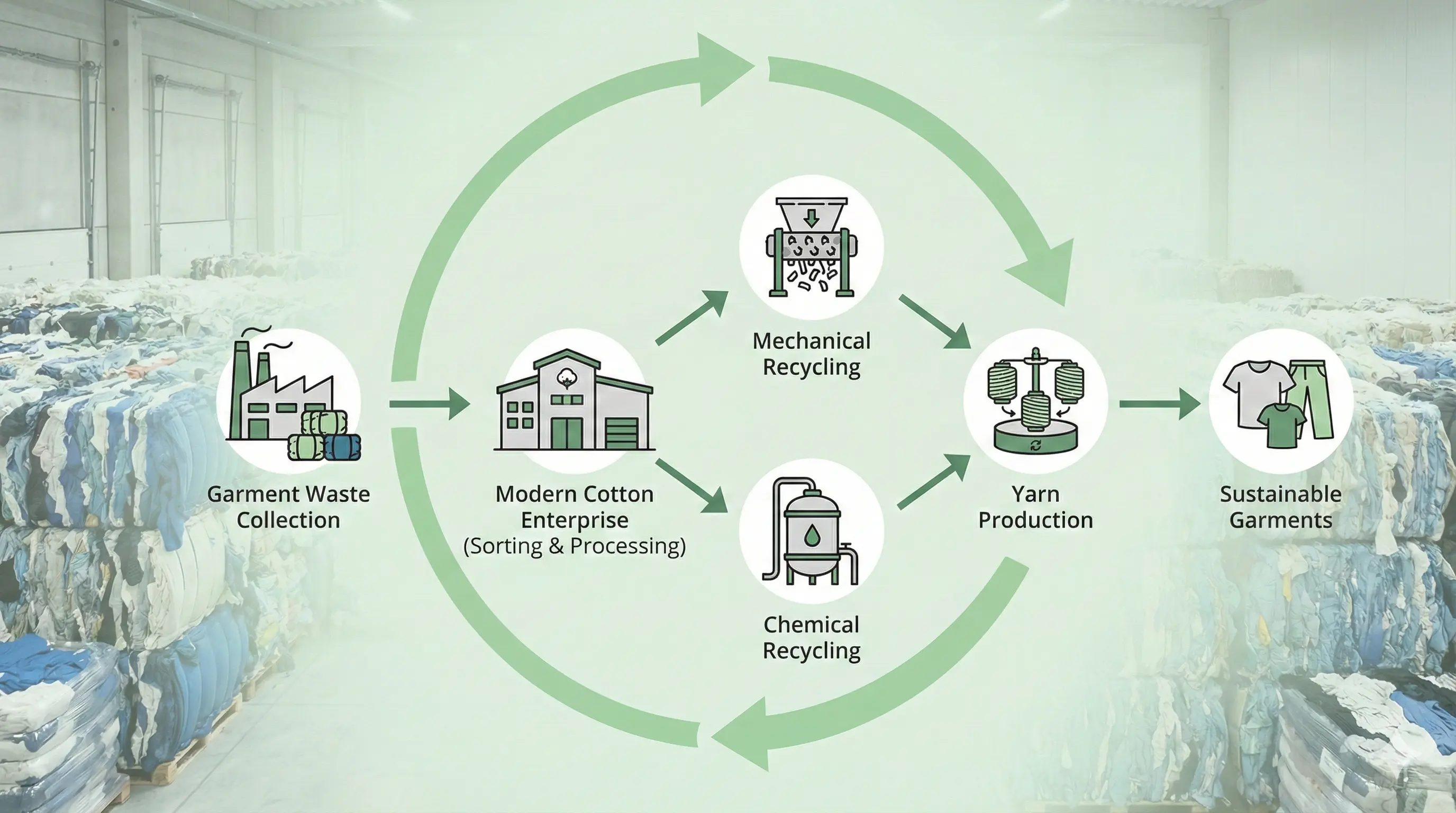
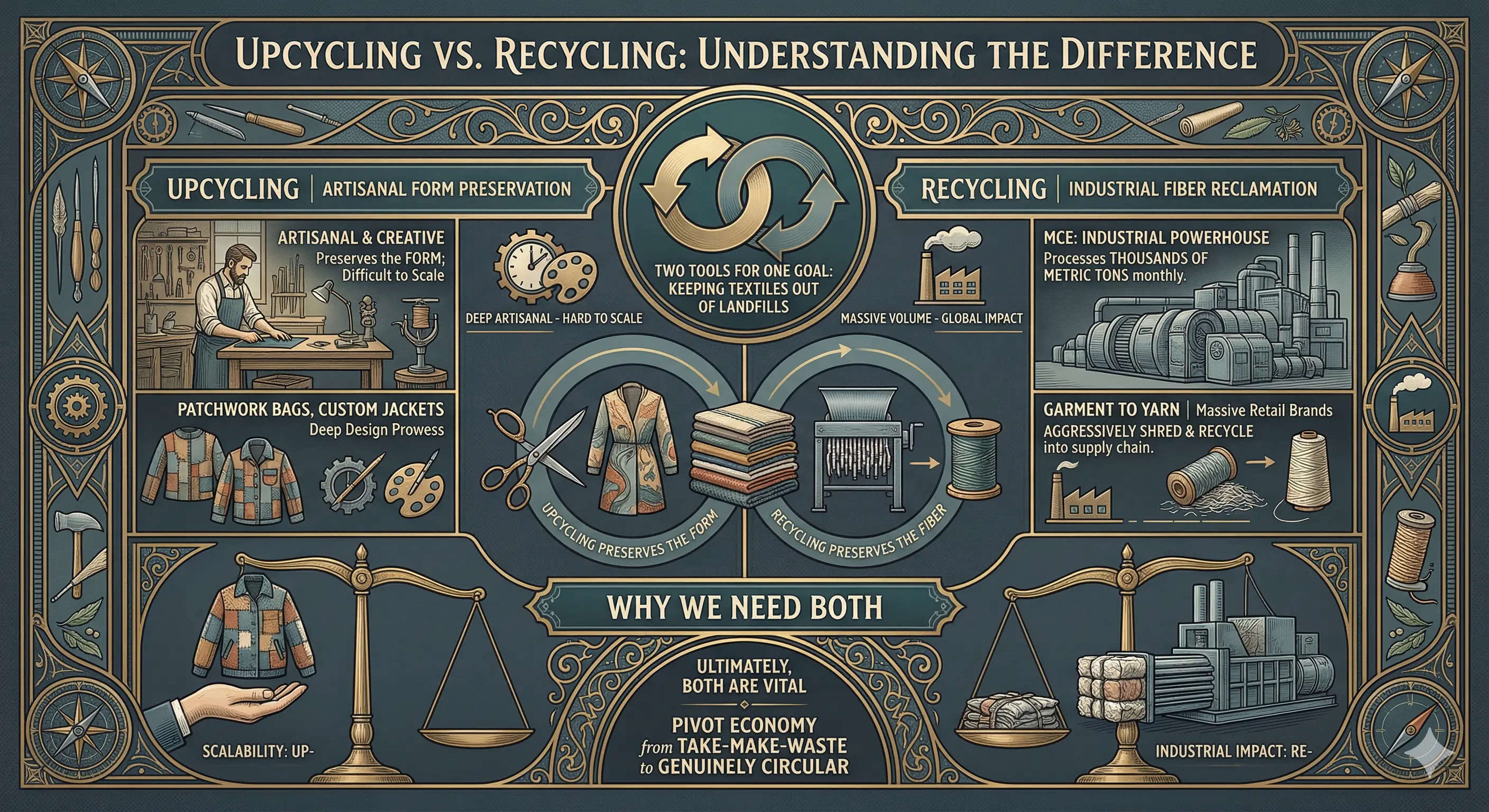
Circular fashion aims to keep materials within a closed loop. Recycling is the engine of this loop
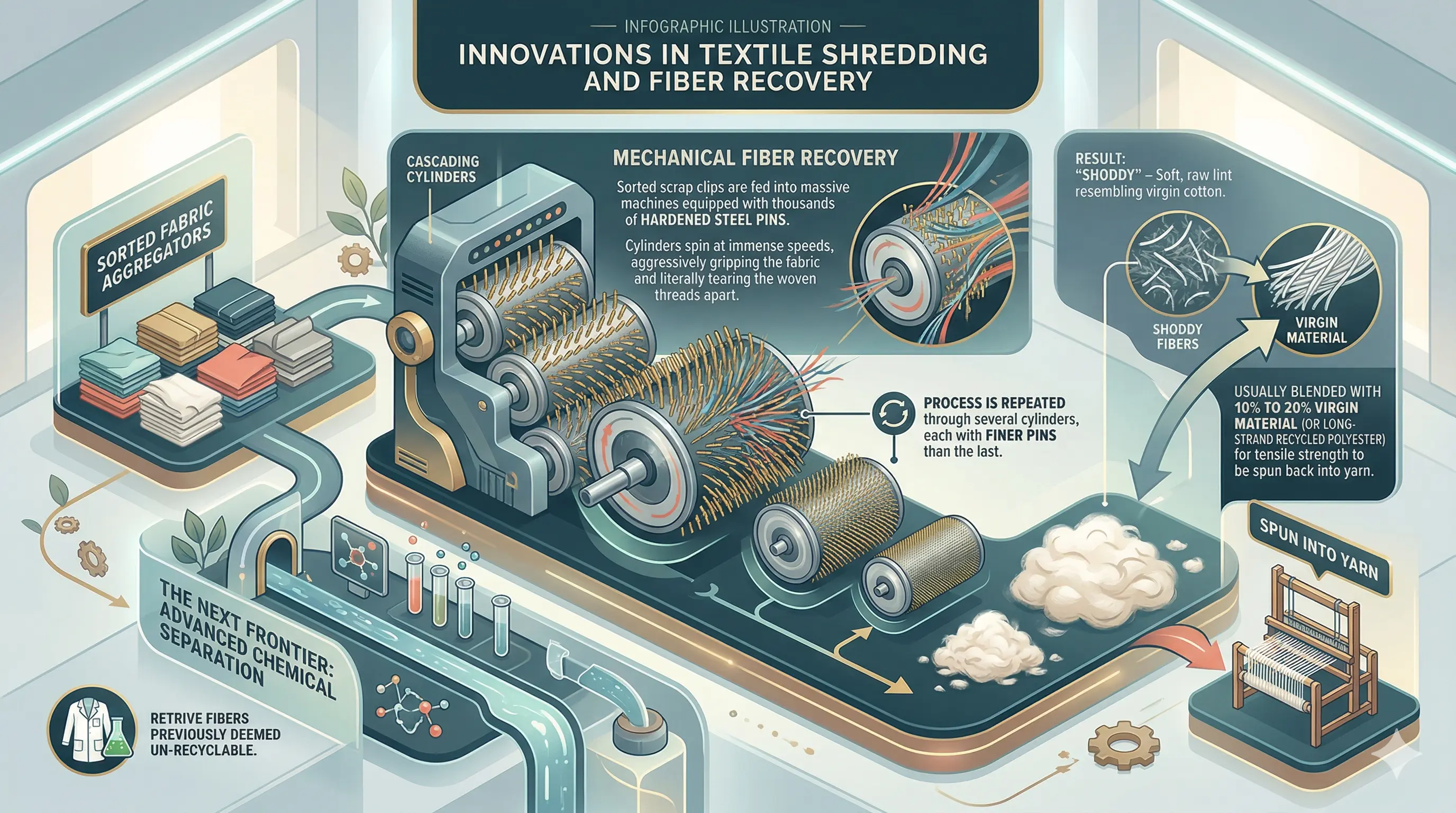
- Mechanical Recycling: The most common method for cotton. Fabric waste is sorted by color and composition, then fed into machines that shred it back into a fiber form (often called "shoddy"). These shortened fibers are then carded and respun into new yarn. Note: Because shredding shortens cotton staples, recycled cotton is often blended with virgin cotton or recycled polyester to ensure strength.
- Chemical Recycling: An emerging technology where cotton cellulose is dissolved by chemicals and regenerated into new, high-quality man-made cellulosic fibers (like lyocell or viscose). This holds immense promise for separating complex poly-cotton blends.
We as an exporter and impacting the circularity by collecting the post industrial waste from garment factories and supplying to global leaders in recycling.
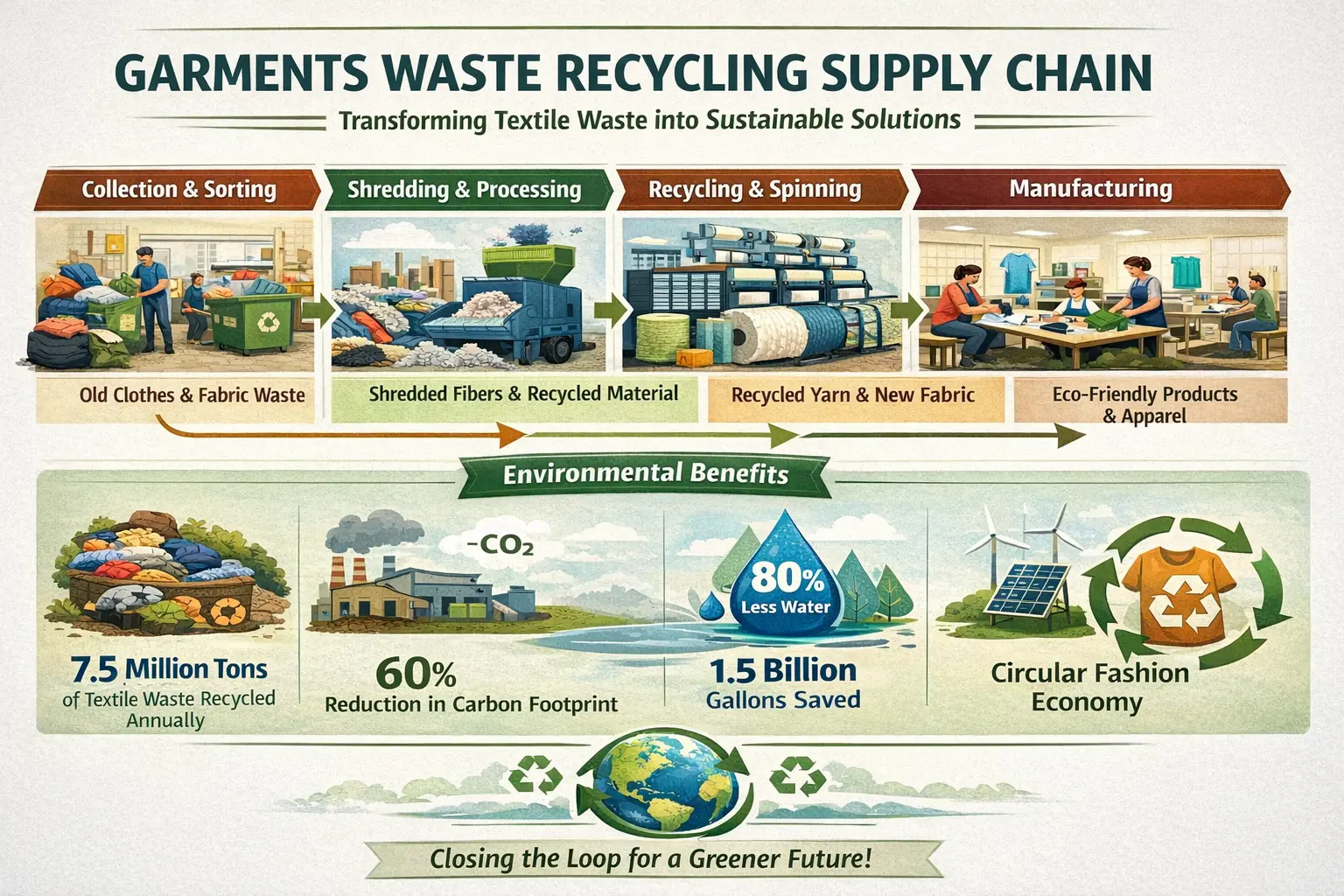
Shifting to recycled cotton has profound environmental benefits compared to growing conventional virgin cotton:
- Water Conservation: Conventional cotton is one of the thirstiest crops on the planet. Recycling existing cotton requires almost zero new agricultural water.
- Reduced Land Use: By regenerating waste, we reduce the need for arable land to grow more cotton, freeing it up for food production or reforestation.
- Eliminating Chemicals: Recycled pre-consumer cotton is already dyed and processed. This removes the need for the intensive dyeing and finishing stages, which are notoriously polluting in terms of wastewater and chemical runoff.
- Diverting Landfill Waste: Every ton of garment waste recycled is a ton kept out of a landfill or incinerator, reducing methane emissions and soil contamination.
We as an exporter and impacting the circularity by collecting the post industrial waste from garment factories and supplying to global leaders in recycling.
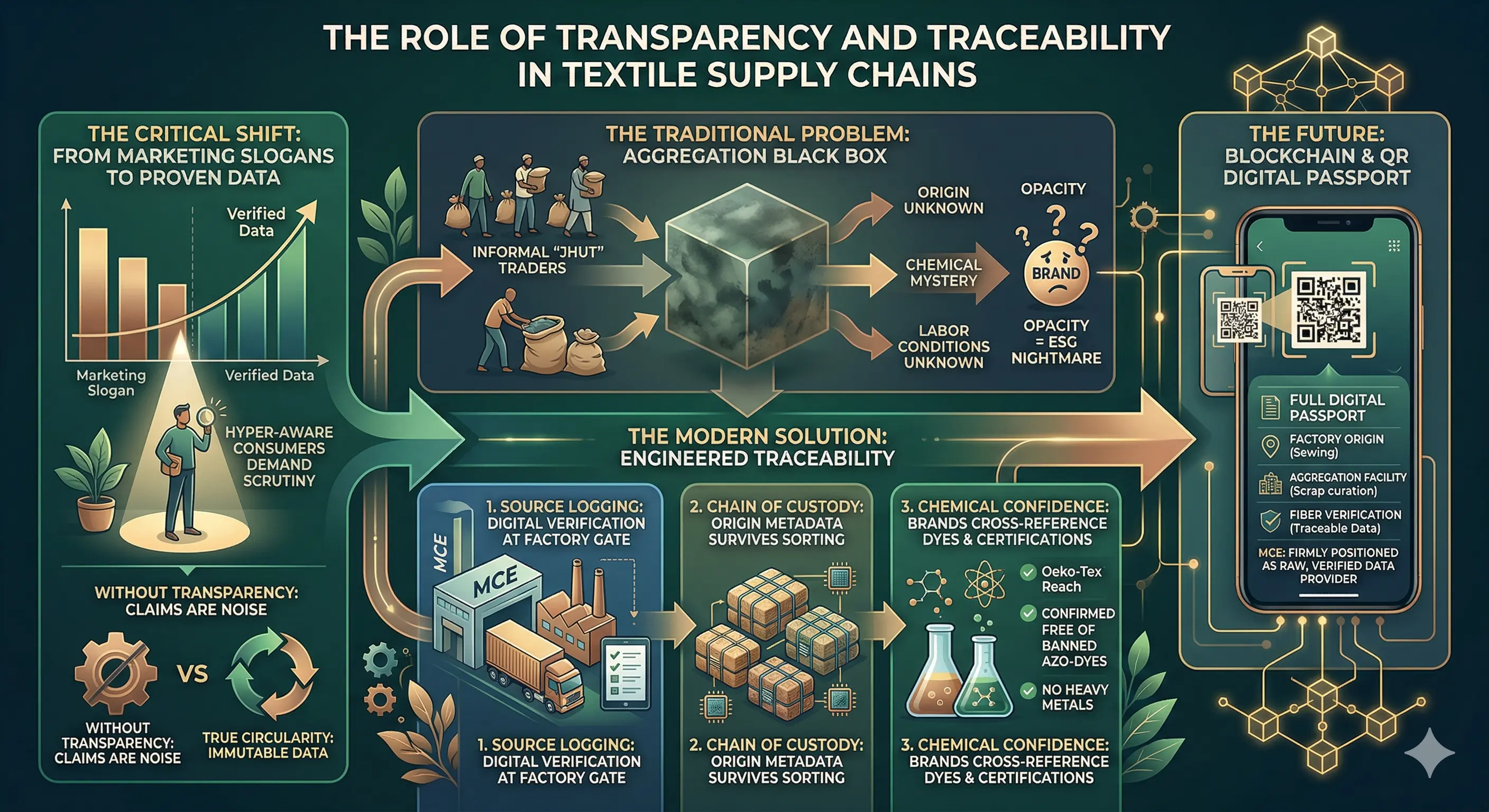
The theory of circularity is sound, but the practical execution requires a new type of business ecosystem. This is where the hypothetical "Modern Cotton Enterprise" (MCE) steps in.
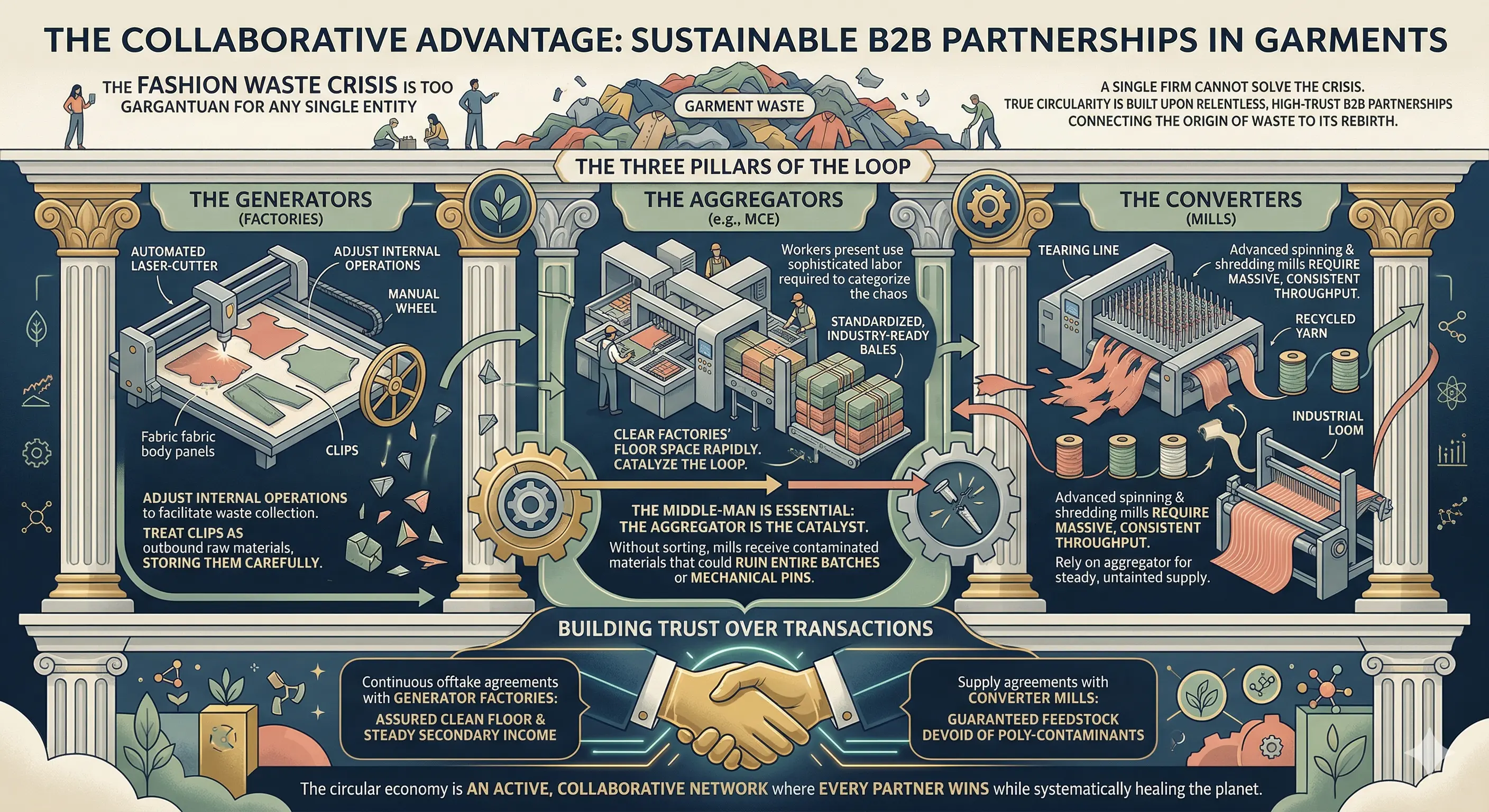
MCE acts as the critical connector between the waste generators and the new production cycle. It is not just a recycling plant; it is a logistics and supply chain management hub.
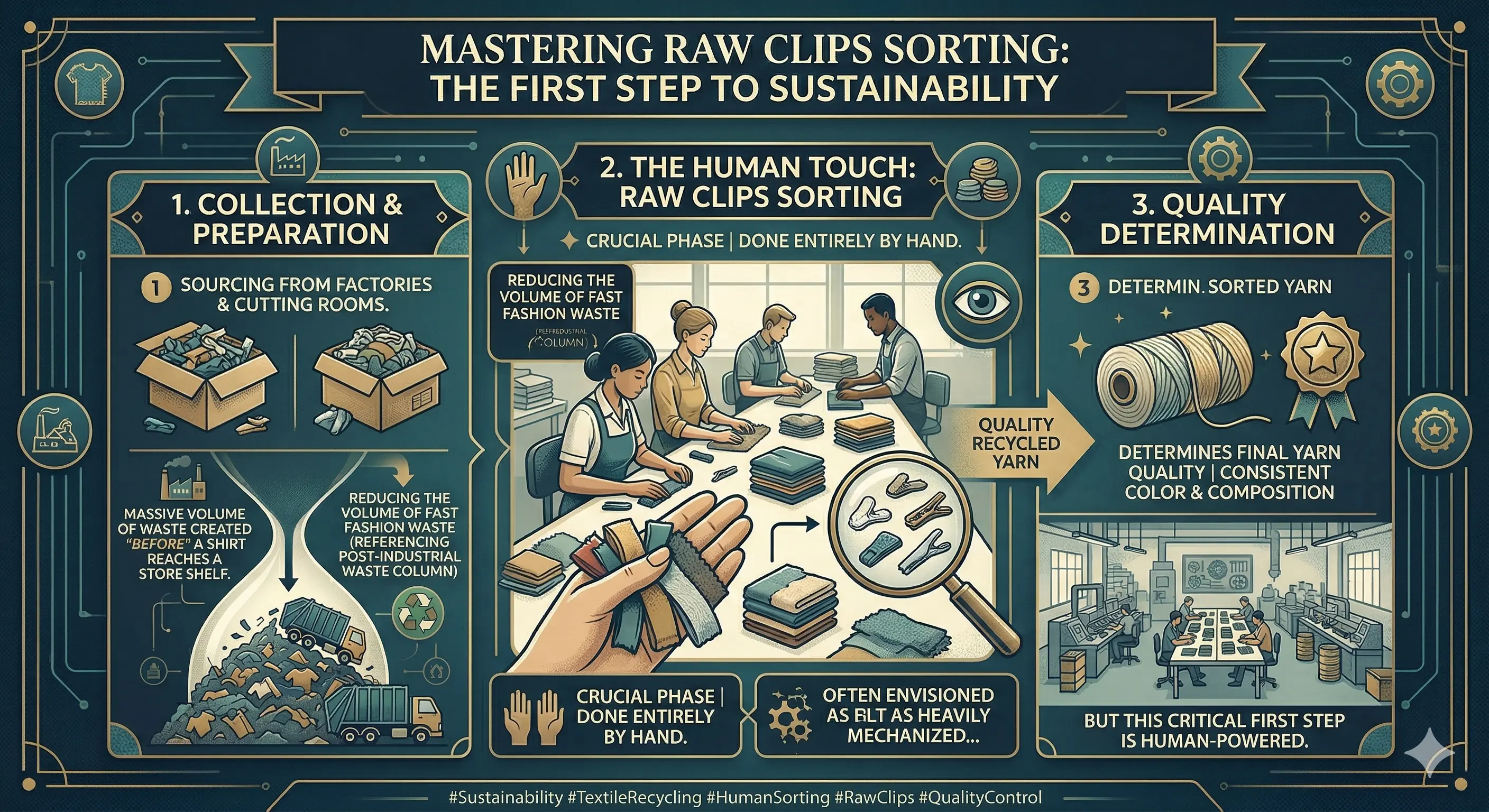
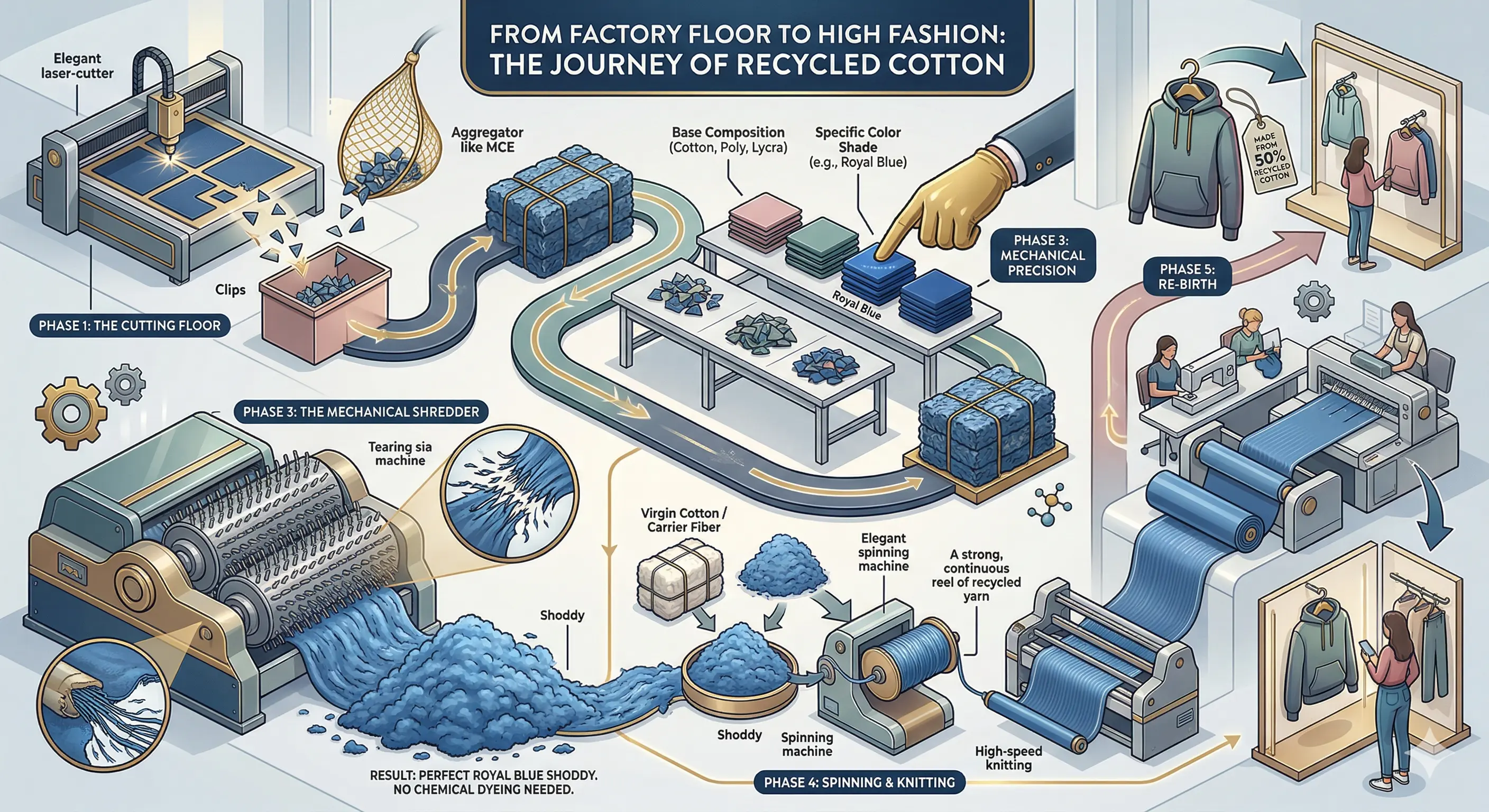
Stage 1: Aggregation and Strategic SourcingThe first challenge in recycling is gathering enough uniform waste to make processing economical. MCE establishes partnerships with major garment manufacturing hubs. Instead of factories paying to have their cutting scraps hauled to a dump, MCE collects this "pre-consumer" material.
Stage 2: High-Precision Sorting and ProcessingOnce collected, the waste must be meticulously sorted. This is the MCE's core competency. In their facility, waste is graded by:
- Composition: Ensuring 100% cotton is separated from poly-blends.
- Color: Sorting by color removes the need for re-dyeing, saving immense amounts of water and chemicals.
- Quality: Separating long scraps from short dust.
After sorting, we export the quality raw materials to the global partners who uses high tech machines ensuring a higher quality end-product.
The transition from a linear to a circular fashion economy is no longer optional. It is an ecological necessity. Garment waste recycling is the cornerstone of this transition.
By treating waste not as trash but as a valuable resource, we can dramatically reduce the fashion industry's environmental footprint. However, this requires more than just technology. It requires the creation of robust new value chains, championed by modern enterprises that can bridge the gap between waste generation and new product creation.
The "Modern Cotton Enterprise" model demonstrates that sustainability and profitability can go hand in hand. By solving the logistical challenge of aggregation and the technical challenge of processing, these enterprises are laying the foundation for a future where fashion is truly sustainable, and the clothes we wear are part of an endless, regenerative cycle.
Recent Post

Sign Up For New Product News & Offers
Monthly Newsletter


Modern Cotton Enterprise (MCE) is a leading garment waste recycling and export company based in Bangladesh, dedicated to advancing circularity in the global textile industry.


Modern Cotton Enterprise © | All Rights Reserved